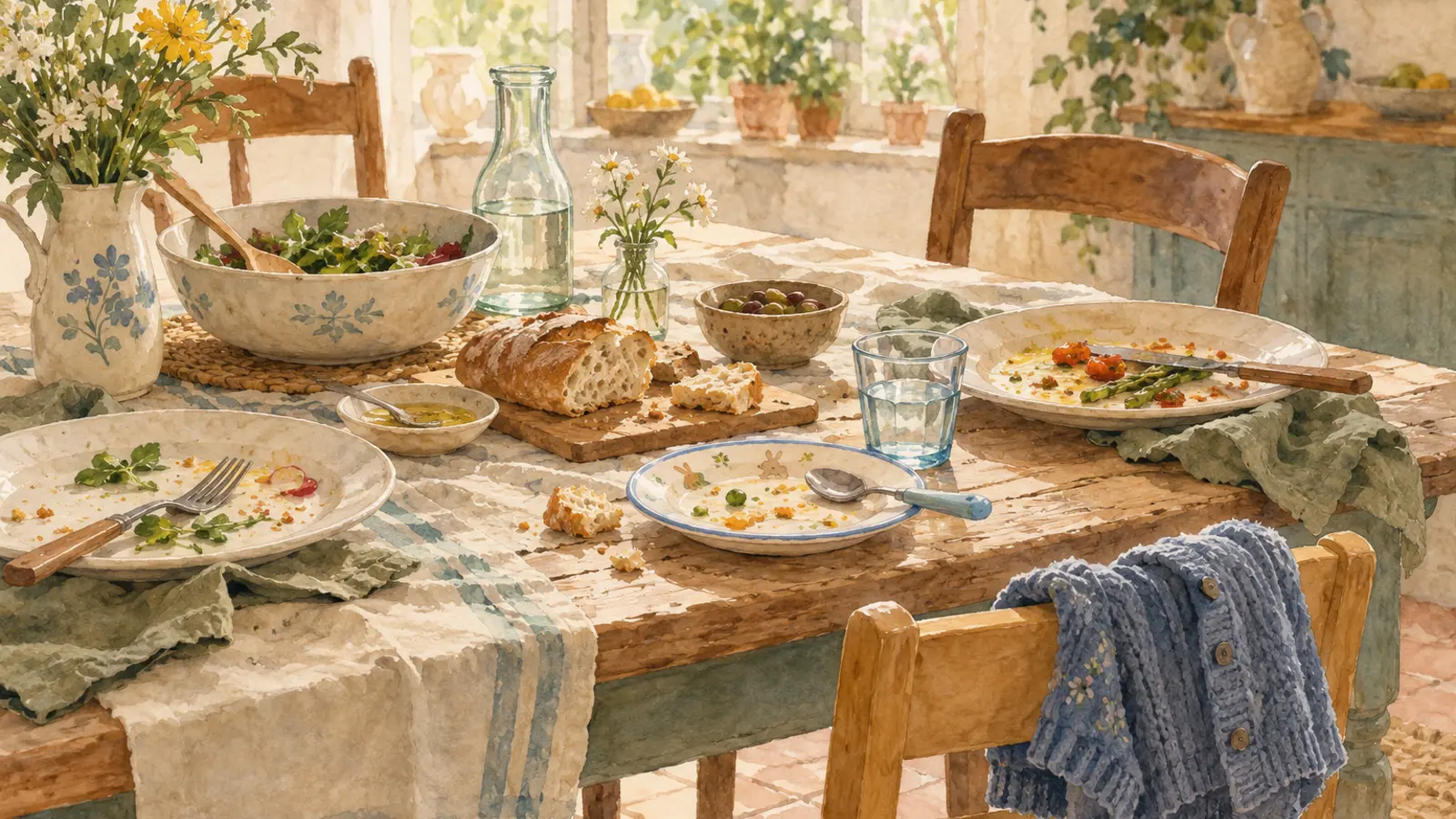
During the same lunch, people asked me three times when we’d have a second child. Malo, my almost three-year-old son, was eating his bread beside me.
The first question sounded like a joke. The second came with an age-gap calculation. By the third, I almost wanted to ask whether someone had brought the form to fill in.
I hadn’t announced any plans. Yet our family apparently had a next stage whose date everyone was waiting for.
A repeated question starts to demand an explanation
I knew some people simply wanted to show interest. But I heard something else too: with one child, we were apparently still waiting to become a complete family.
Sometimes they added that Malo needed to learn to share. Or that he’d be happy to have someone to play with. In a few sentences, a potential second child became a solution to difficulties already being assigned to the first.
I didn’t want to debate every portrait of only children. Nor did I want to describe Malo as exceptionally sociable to defend our right to be three.
His behaviour at lunch wasn’t a case to present. He sometimes struggled to lend his belongings, like other children. That didn’t decide how many people ought to live in our home.
Reply without opening up your whole private life
I could have a personal answer to this question, or not have one. I could want to talk about it with some people but not in the middle of a meal. Nothing required me to provide a reason convincing enough to end the discussion.
So I tried responding to the conversation rather than everything it assumed.
“If we have something to announce, we will. For now, I'd prefer you not to keep asking.”
“I know you're interested in us, but I don't want to talk about this today.”
A polite sentence doesn’t guarantee the other person stops. If the question returns, I can repeat the boundary, change the subject or leave the conversation for a while. I don’t need to add intimate details to make my refusal more acceptable.
I also wanted to avoid talking about Malo as though someone were missing from his life while he sat at our table.
He finished his bread, then asked whether we had pudding. He didn’t seem to be waiting for the next family member before considering that lunch could continue.
Neither was I.
Keep this handy
The situation
People keep asking when you'll have a second child?
Try this
Return to the important request using few words and a limit you can actually follow through on.
- “I know you don't want to. This still needs to happen, and I can help.”
Keep in mind: A clear boundary can coexist with empathy and does not require agreement.