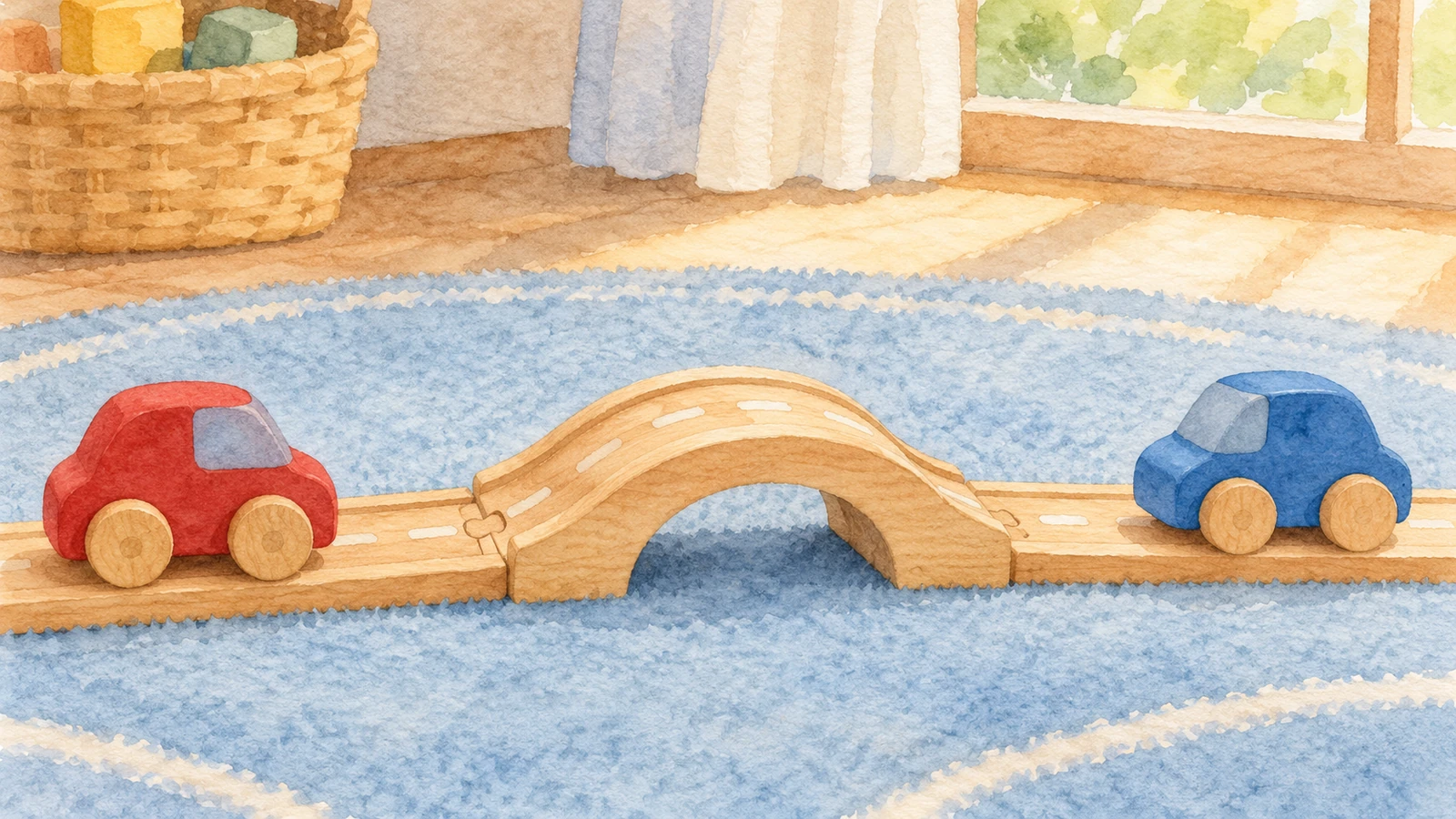
Oscar, four and a half, wanted to keep his toy track in the middle of the walkway. His dad, Julien, had asked him to clear a path to the kitchen. The third time Oscar refused, Julien pulled the rug too quickly. The bridge fell and they both raised their voices.
A few minutes later, Julien is still working out how to explain why he got angry. Oscar comes back with a red car and a blue one. He sets the blue one by his dad’s knee and rolls the red one towards him. Julien picks up the blue car.
Welcome your child’s way of coming back
Holding out a toy car can be a way to reconnect. Julien can roll his car and see if Oscar feels like playing for a bit. He can take up the invitation and save his apology for when Oscar is ready to hear it.
The bridge is still on the floor and the walkway needs to stay clear. But after a few trips back and forth, Julien and Oscar can talk again without drowning each other out.
Come back briefly to what happened
“Yes, I’ll play with you. Can you show me where my car goes?”
“I pulled the rug and knocked your bridge down. I’m sorry. Shall we find somewhere it can stay up?”
If your child would rather keep their distance, you can stay available and talk about what happened later. If something is dangerous, the first step is to make sure everyone is safe. The timing of the conversation can change even when the boundary stays the same.
Oscar points to a corner of the rug near the sofa. Julien checks that they can still get past and helps him rebuild the bridge there. Julien holds the first piece while Oscar shows him where it goes.
Keep this handy
The situation
After an argument, your child offers you a toy or comes to sit with you.
Try this
Accept their invitation, then briefly revisit what happened when you’re both ready.
- Yes, I’ll play with you. Can you show me where my car goes?
Keep in mind: Reconnecting can make it easier to apologise and put things right. The boundary still stands.