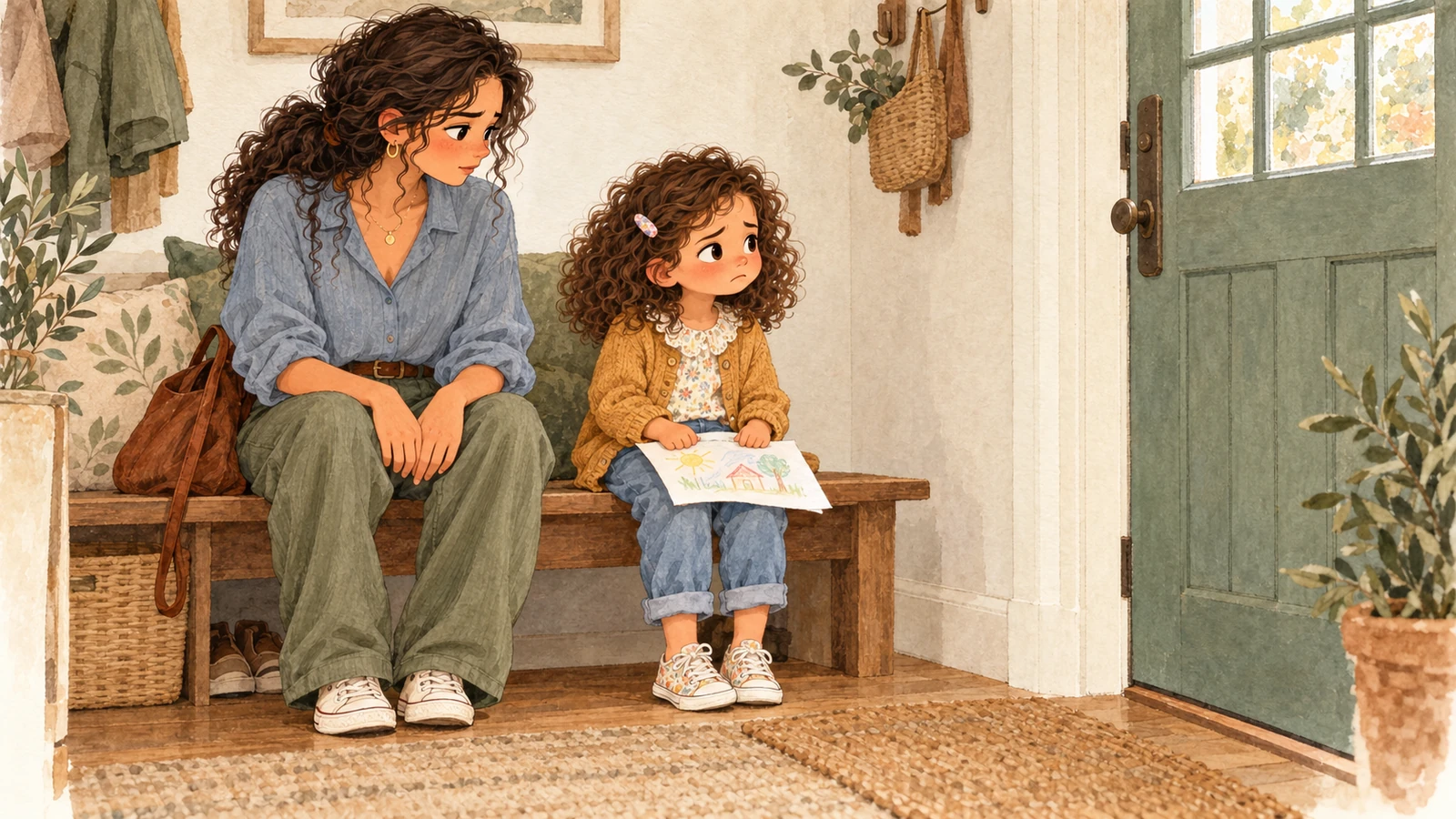
Iris’s cousin had just gone home. My three-and-a-half-year-old daughter had stayed on the hallway bench with the drawing they’d made together.
I put on a ridiculous voice to announce that her socks were demanding dinner. Usually, that voice enjoyed a certain success.
Iris didn’t laugh.
When my child is sad, I sometimes look for the button that will bring joy back. That evening, I’d started pressing before even sitting beside her.
A sad child isn’t necessarily waiting for a distraction
I suggested looking at her favourite book. Then I reminded her she’d see her cousin again. It was true, but it didn’t bring her back into the hallway.
“I wanted her to stay.”
Iris wasn’t asking for a better programme. She was telling me what she’d lost for that evening: company, playing together, the chance to carry on.
I had no reason to prolong her sadness deliberately. But I could stop presenting every new suggestion as an exit she should take straight away.
Her lack of a smile made me uncomfortable. I noticed because my ideas were coming faster and faster while she moved less and less.
Eventually, I sat down. I said she’d have liked more time with her cousin. She placed the drawing between us.
Comfort without asking the feeling to change
I could offer a hug and accept that she might not want one. I could also stay for a moment without asking five questions about her sadness.
“You're missing her already. I can stay with you for a bit.”
“Dinner will be ready soon. You can bring your drawing beside your plate.”
We didn’t need to wait until she was cheerful to continue the evening. The meal could arrive with a little sadness still present. That didn’t mean I’d failed to comfort her.
Humour wasn’t forbidden either. If she felt like laughing again, I could follow her lead. I simply didn’t have to obtain that laugh as proof my response had worked.
After a while, Iris asked me for sticky tape. She wanted to put the drawing near the door to show her cousin when she returned.
She still wished she was there. She also had an idea for keeping something from their afternoon.
I brought the tape. My socks could wait before speaking again.
Keep this handy
The situation
Your child is sad and you immediately try to make them laugh.
Try this
Support a young child's sadness without immediately replacing it with joy: listen, offer company and let everyday life continue.
- “Tell me what's difficult for you.”
Keep in mind: There is no single answer for every child or every day.