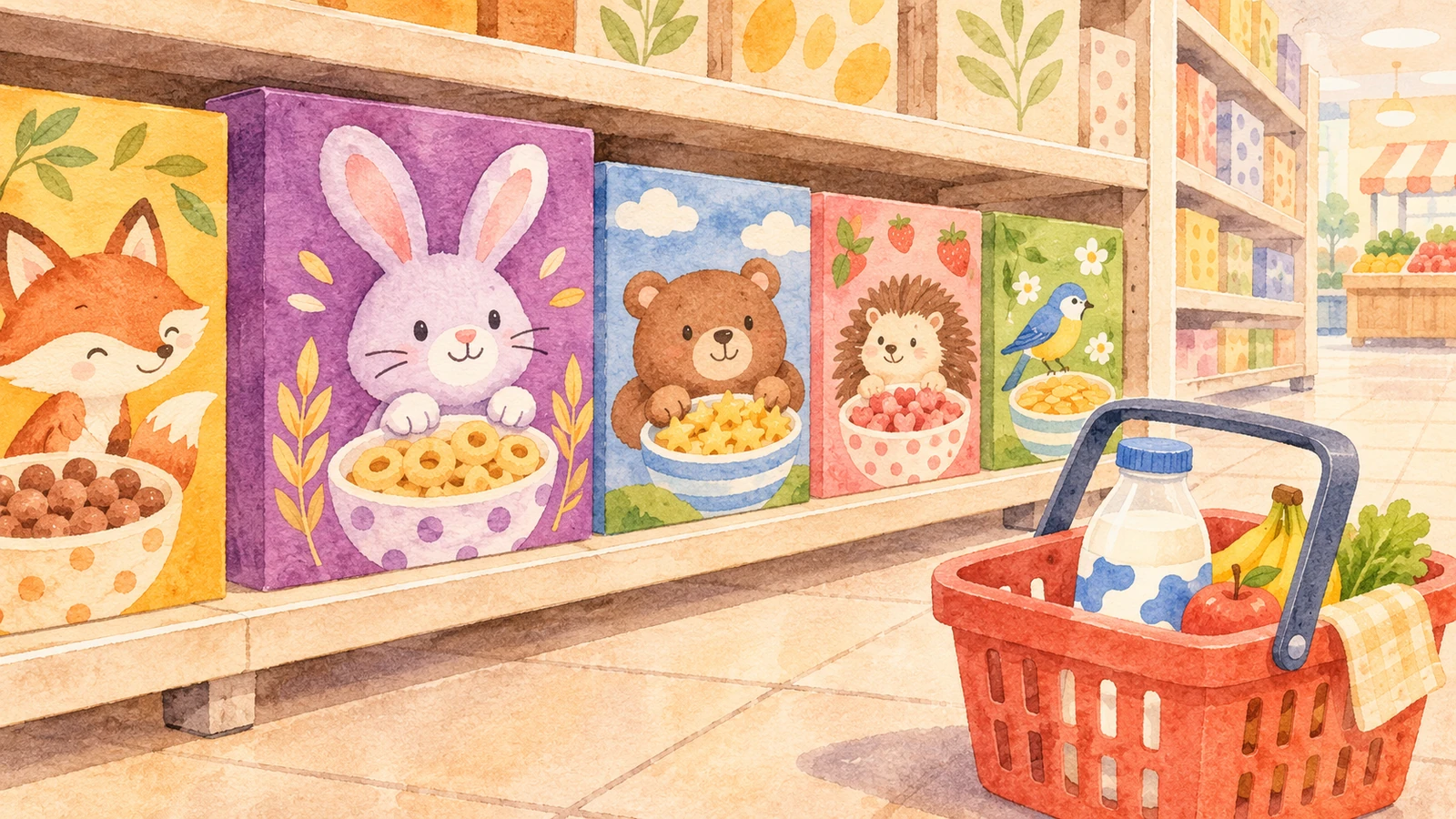
Nora has gone to the supermarket for milk with her three-and-a-half-year-old daughter Iris. Halfway down the aisle, Iris stops in front of a cereal box with a purple rabbit. Nora was looking for the bottles at the end of the aisle. The rabbit was right at Iris’s eye level.
Iris picks up the box. Nora tells her they already have cereal at home. Iris hugs the box to her chest. When Nora reaches to take it back, Iris starts to cry and keeps saying she wants the rabbit one. Nora hadn’t even noticed the rabbit until she had to say no.
Look at the shelf from your child’s height
Colours, characters and shelf placement can make some products easy to spot. An adult looking for milk and a child walking at their own eye level may be seeing very different shops. Realising that can help you hear the request without redoing the shopping list in the middle of the aisle.
Nora might fancy buying the box another time. Today she came for milk and decides to stick to that. Iris can still be disappointed about putting the cereal back, even when Nora answers calmly.
Make one decision before you go in
“Today we’re here for milk. You can help me put the bottle in the basket.”
“You spotted the purple rabbit. The box is staying here today.”
If you know the shop, you can take a different aisle or give your child a job they’ll enjoy. If they already have the box, it may be enough to help them put it back and carry on. If they’re still crying, you can pause to one side before moving on.
Iris follows Nora to the bottles and asks whether the rabbit will be there tomorrow. Nora says they can look next time. Then she hands Iris the milk to put in the basket.
Keep this handy
The situation
Your child spots a box you hadn’t planned to buy.
Try this
Say what you came for and offer a job that helps you carry on shopping.
- You spotted the purple rabbit. The box is staying here today.
Keep in mind: A calm answer leaves room for disappointment. Pause if you need to.