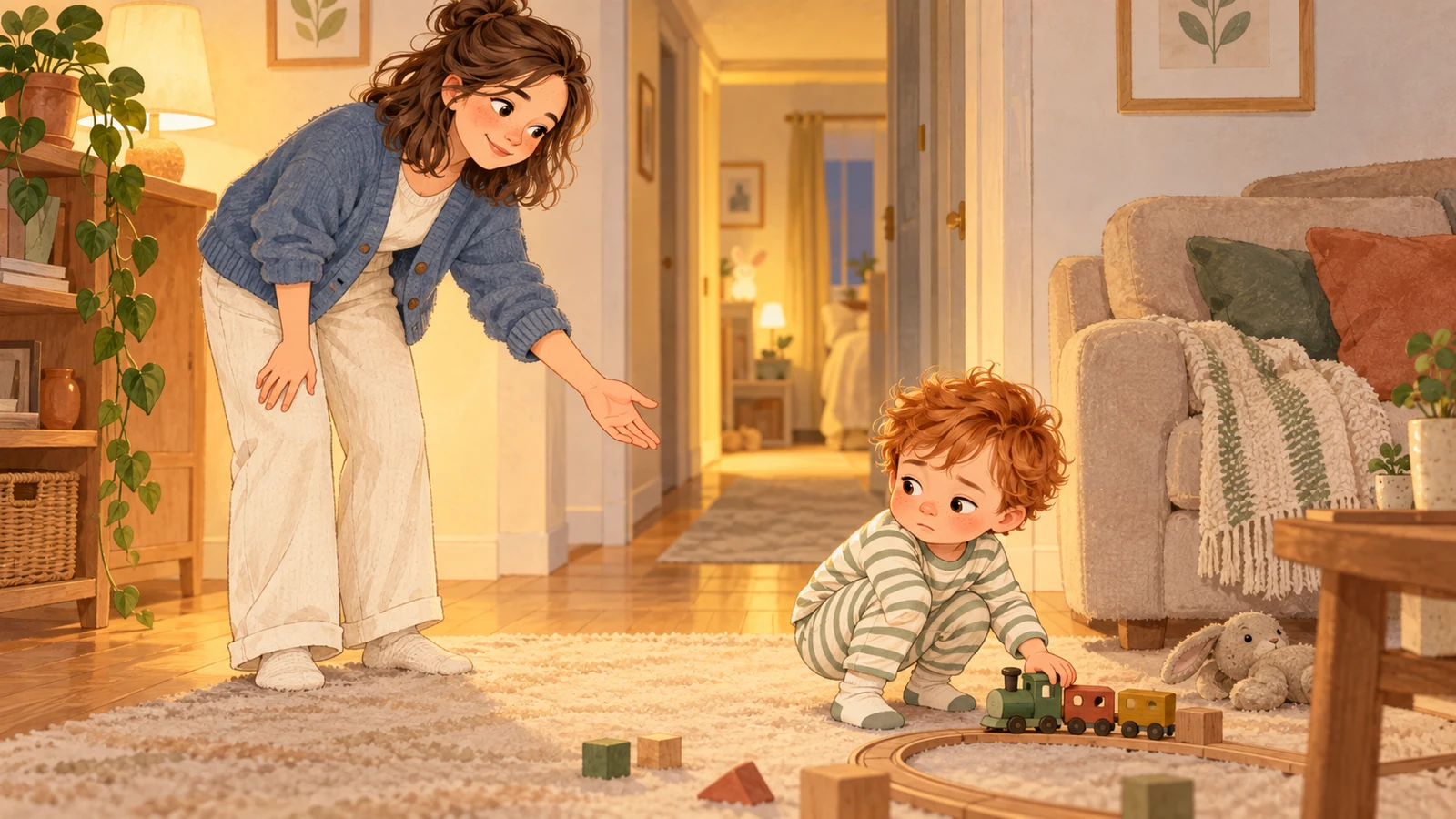
Gabriel, my nearly four-year-old son, was making his truck bounce on the coffee table. After asking him twice to put it down, I started, “If you don’t put that truck down, there won’t be any…”
“Cartoons,” he finished, without stopping his game.
He knew my threat by heart. I was still trying to work out how to get him to cooperate.
The cartoon was planned for much later. The immediate problem was the truck banging against the table, then potentially flying towards the glass beside it.
I had linked two things that had very little to do with each other, hoping one would make the other stop.
When “if you don’t…” becomes a familiar threat
In the moment, a threat can seem very effective: it announces the loss of something the child wants. But when I repeat it without following through, Gabriel may eventually hear mainly the start of a negotiation.
And if I do follow through, we may spend the rest of the day discussing the cancelled cartoon. The truck will have disappeared from the conversation long before.
That doesn’t mean a limit should never lead to a practical next step. It simply helps when that step concerns what is actually happening.
If an object is thrown, I can put it out of reach to prevent another throw. That action protects the situation in front of us. Cancelling a weekend outing over the same truck tells a different story.
The word “consequence” isn’t enough to make a punishment logical. I can also ask what my intervention needs to achieve right now: stop the action, protect someone or help us move on.
Saying what I will do, then doing it
I moved the glass and stopped the truck with my hand. Gabriel protested. I showed him the rug, where he could roll it along.
I didn’t need to find a more impressive threat. I needed a clear limit and an action I was prepared to take, as when we announce a decision without disguising it as a false choice.
“The truck can roll on the rug. I won’t let it bang against the table.”
“If you throw it, I’ll put it aside to stop the throwing.”
The alternative wasn’t welcomed with enthusiasm. Gabriel specifically wanted to bounce his truck. I stayed near him and held the boundary, without asking him to agree that it was wonderful.
Eventually, he moved his game to the floor. The truck found a road between two cushions.
I no longer needed to decide what happened to the cartoon to deal with what was happening on the table.