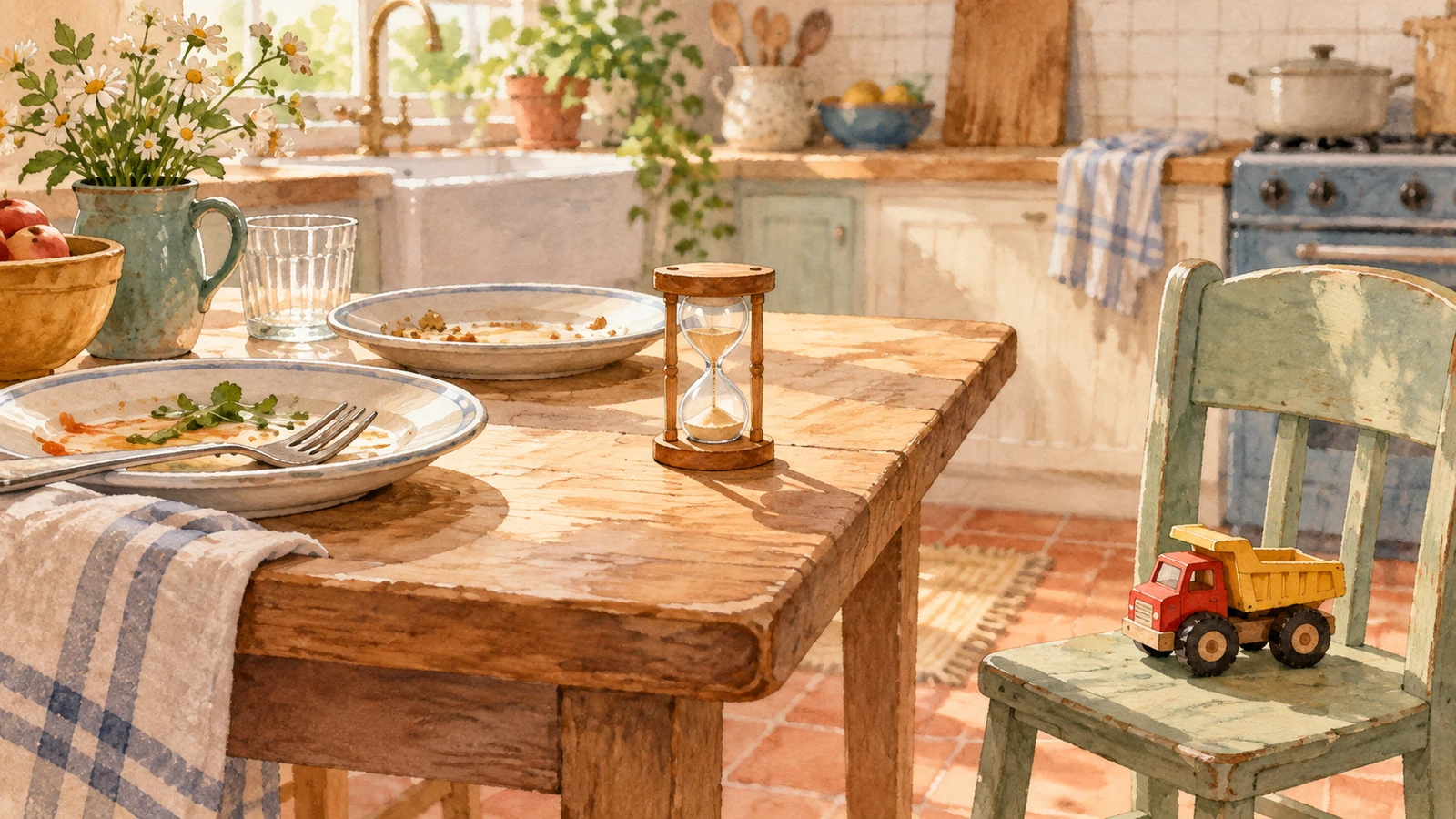
Camille was finishing clearing the table when Malo, her nearly-three-year-old son, tugged at her sleeve.
Malo came back before she had even put the first plate in the sink. Then again, carrying his truck. The third time, he sat on the floor, furious: she had said she would come.
Camille hadn’t lied. She really thought she would finish quickly. But for Malo, those two minutes described nothing he could see. He only knew that he wanted to play now and his mum wasn’t coming.
Why young children find waiting hard
At three, waiting still draws on skills that are developing: holding back a wish, picturing what will happen next and tolerating frustration that is already very much there. Two minutes measured on a clock don’t necessarily mean anything to a child who can’t tell the time.
Adults get impatient too when someone promises “soon” without giving us another clue. The difference is that we can usually imagine what finishing a task involves and estimate how long is left.
Camille said “two minutes” as she might have said “I’ll be right back”. Malo mostly heard a promise with no visible end.
Showing what is left before you come back
The next day, Malo asked the same thing while she was preparing lunch. Camille avoided picking a number at random. She showed him the three things still to do: put out the plates, fill the glasses and wipe the table.
Malo looked at the glasses, then went off with his truck. He came back once before she had finished. This time, Camille could show him what was left. He hadn’t suddenly become patient, but he had a concrete clue.
You can also use a small sand timer, count a few actions together or offer your child something to do during a short wait. The aid doesn’t make the feeling disappear: it simply gives some shape to what you’re asking.
“I'll finish putting out these three plates, then I'll come. You can see how I'm getting on.”
“You'd like me to come right now. I'll finish this and join you.”
Some days, Malo won’t wait, even with the best cues in the world. Camille may need to stop what she’s doing or let him stay beside her.
But she has stopped believing that saying “two minutes” is enough to make two minutes appear in her son’s head.
Keep this handy
The situation
Does your child struggle to wait two minutes?
Try this
You can also use a small sand timer, count a few actions together or offer your child something to do during a short wait.
- “I know you don't want to. This still needs to happen, and I can help.”
Keep in mind: A clear boundary can coexist with empathy and does not require agreement.