Gabriel, my almost four-year-old son, was pointing at the corner of his bedroom. A ghost had apparently chosen the spot between the curtain and the chest of drawers.
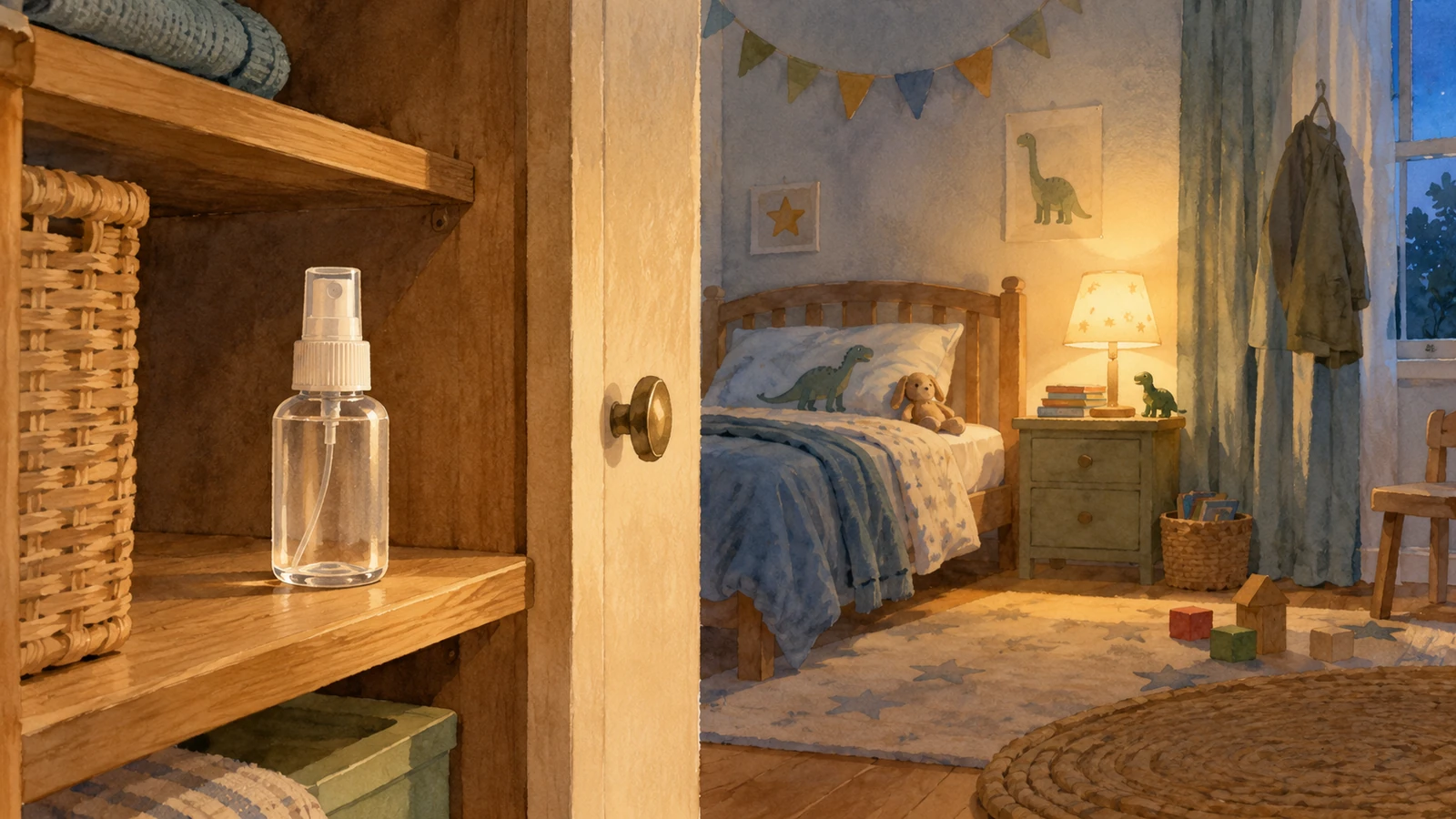
I looked at the nightlight, then thought of the small empty spray bottle in the cupboard. A magic spray, two squirts, an improvised spell. I could already picture bedtime customer service saving ten minutes.
My child was afraid of a ghost. I was about to suggest that sleeping in his own room required special equipment.
A monster spray can tell a different story than we intend
In my mind, the spray was a reassuring game. But Gabriel hadn’t suggested playing. He stood at the edge of the bed, waiting for me to deal with a danger.
If I announced that I had chased the ghost away, what would he hear? Perhaps that I had succeeded. Perhaps also that his bedroom could contain visitors that only a bottle knew how to remove.
A ritual can bring comfort in the moment. If a spray has already been used, we can simply explain that it was a game, without giving it real powers. There is no need to blame the child for believing it.
I didn’t need to mock his fear or deliver a lecture. I could tell him I could see he was worried, stay close and talk about what was actually in the room.
Reassuring him without organising a ghost hunt
Gabriel was still pointing at the curtain. I switched on the lamp with him: his coat, hanging behind it, was casting a shape on the wall. We moved it. Looking together at what worried him didn’t mean inspecting every cupboard to certify that an invisible being had gone.
I could try saying:
“Looking at that corner frightened you. That's your coat's shadow on the wall.”
“We can leave the little light on, and I'll stay beside you for a while.”
There was still room for play. Inventing a character to feel more comfortable in the dark, while knowing it is a story, is different from presenting a product as essential protection against a real threat. And I could respect our family beliefs without adding a ritual intended to chase this ghost away.
If this fear returns often, becomes very intense or disrupts his nights, talking to a professional can help us understand what is happening. The right phrase doesn’t have to solve everything.
Gabriel asked to leave the door ajar. He was still watching the curtain, but he got back under his blanket. I sat down beside the bed. The spray bottle stayed in the cupboard.
Keep this handy
The situation
Your child fears an imaginary presence at bedtime, and you are considering a ritual to chase it away.
Try this
Acknowledge the fear, talk about real things in the room and offer company or light, without giving an object protective powers.
- “You can tell me what frightens you. I’m listening.”
Keep in mind: A game can remain a shared game. Persistent or overwhelming fear deserves appropriate support.