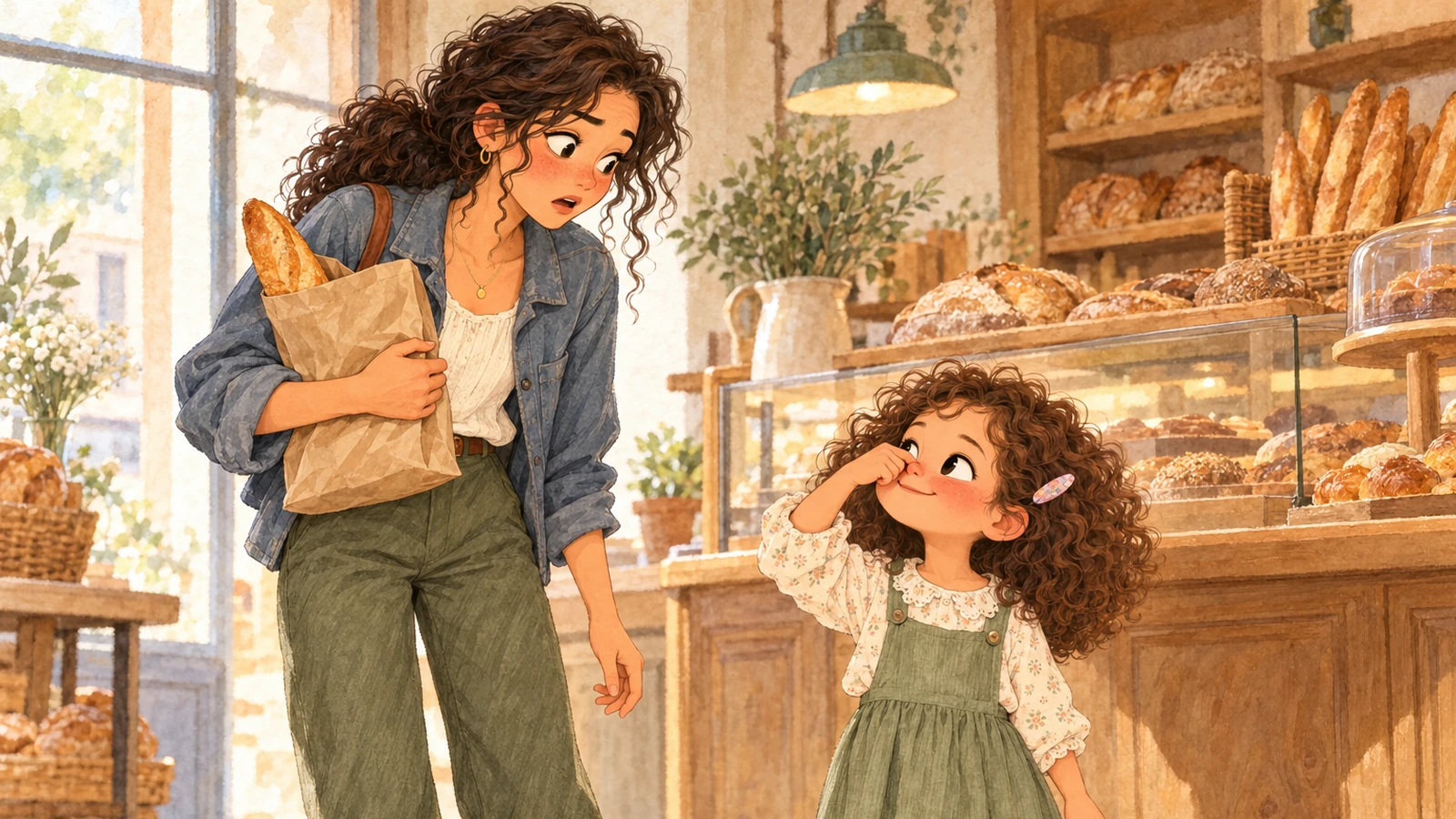
In the bakery, Iris, three and a half, pinched her nose in front of the counter.
Nora, her mum, looked down at her. Iris was already smiling, ready to enjoy the effect she had created. But the brief silence in the shop was nothing like the laughter the night before.
At a family meal, someone had pulled that face at a piece of cheese. Iris had copied it. The adults had laughed, then asked her to do it again. Nora had smiled too.
The next day, her child was repeating the behaviour. The little mimic had remembered the gesture and the words. She had forgotten to ask which shops allowed the act.
Why children repeat what makes people laugh
A child can be very good at noticing what amuses adults without understanding why the same thing becomes awkward elsewhere. Yesterday, that gesture had won her a delighted audience. Today, she was expected to know when to change her act.
The problem was not only what Iris repeated. It was also the message she received: grown-ups laughed, asked for another version, then wanted it to stop at the right moment.
We can have laughed and later decide the joke needs to stop. But repeatedly asking for “more!” makes the boundary harder to understand.
Nora explained to Iris that she could say she disliked a smell without performing that routine in front of people. She did not need to shame her or pretend nobody had laughed the day before.
Bringing the adults into the conversation too
Back home, Nora spoke to the family. She could ask them to stop encouraging the imitation without putting everyone’s sense of humour on trial.
With Iris, then with the adults, she could say:
“We laughed yesterday. But I don’t want us to say that to people any more. You can say you don’t like the smell.”
“If we want her to stop, let’s avoid asking her to do it again to make us laugh.”
It also helps to suggest another way of having fun: a robot voice, an animal noise or an absurd song that targets nobody. If an adult starts the act again anyway, a parent can change what they do in the situation, such as taking the child to begin another game.
Iris did not drop the grimace immediately. At the next meal, she pinched her nose again. Nora repeated the boundary, and someone suggested making a tractor noise.
Dessert was very noisy. This time, the adults were laughing at something else and no longer asking her to pull the same face.
Keep this handy
The situation
Your child repeats in public an imitation that made the family laugh, then hears conflicting requests to stop or repeat it.
Try this
Set a brief boundary and ask adults to stop requesting the act too. Suggest another way of having fun that does not upset or target anyone.
- “Let’s leave that joke. Can you show us your other voice?”
- “Let’s help her find something else that makes us laugh.”
Keep in mind: The gesture may return. A laugh that slips out does not cancel the boundary, and the child may need several consistent reminders.