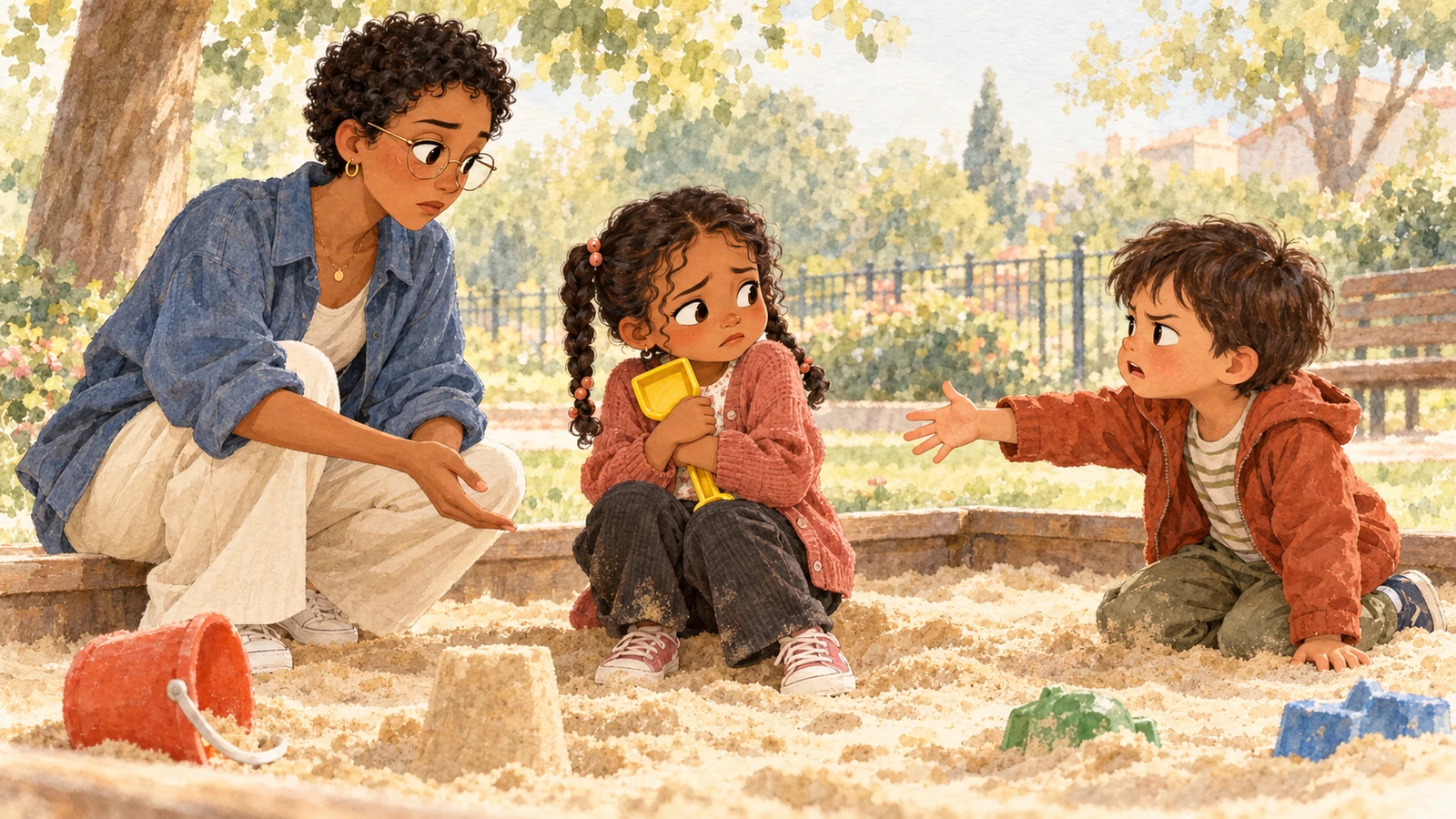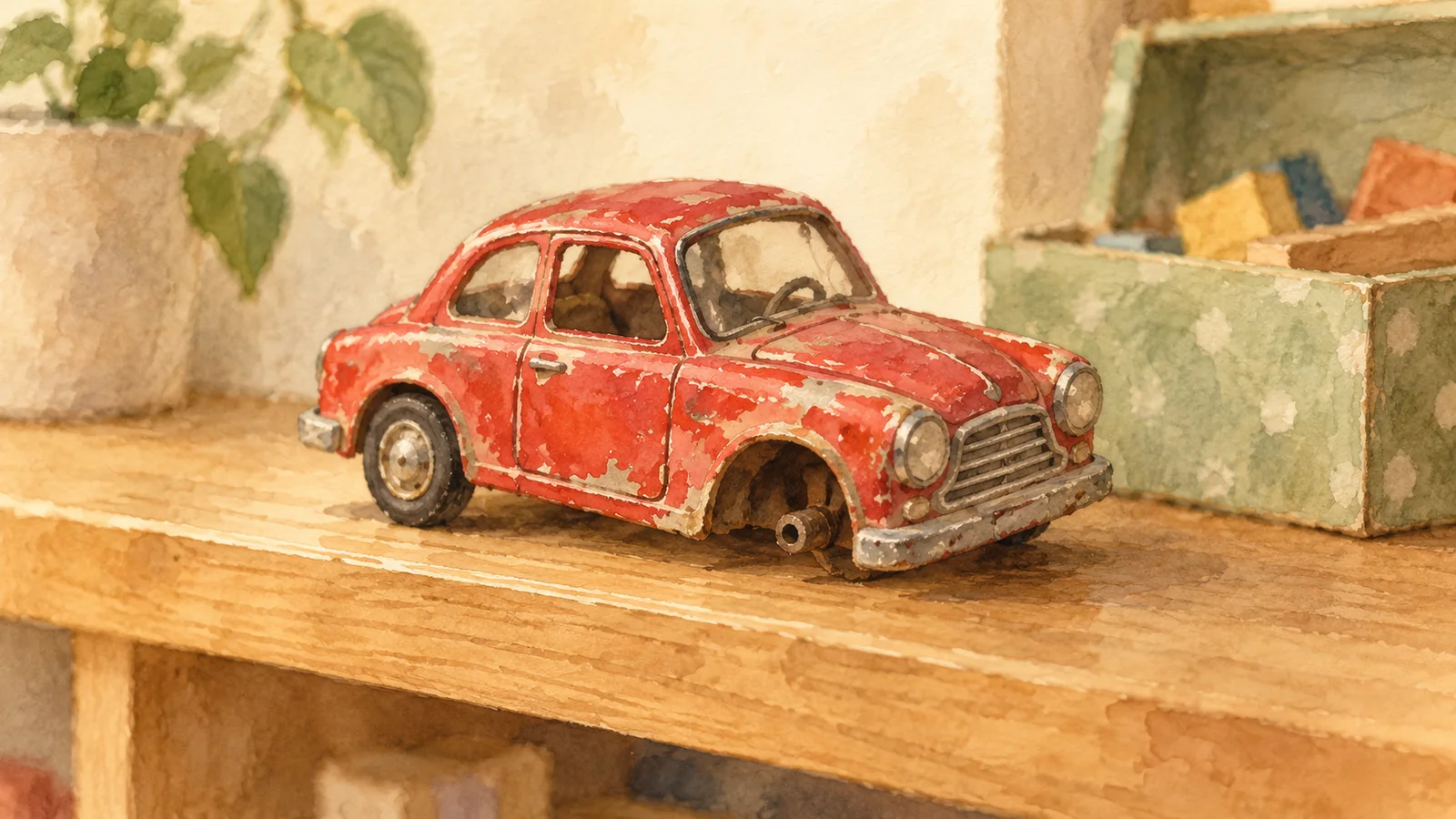
Malo, my almost-three-year-old son, pulled his truck close when a friend at the park reached for it. I had tried to negotiate a little turn. The truck had not moved.
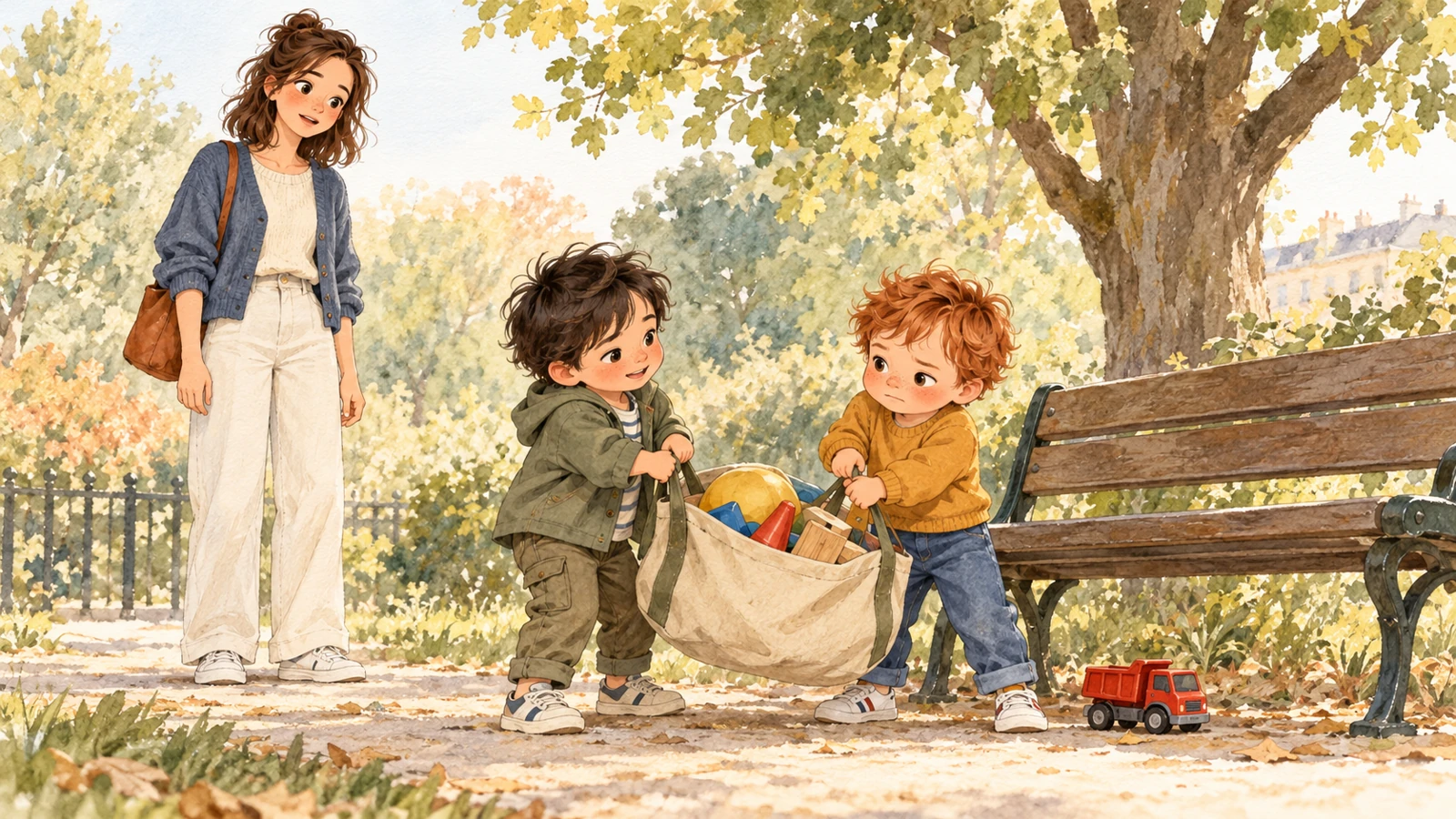
A few minutes later, the same boy was tugging at a bag filled with play things. One handle trailed on the ground. Malo went over, took the other and helped him move it to the bench.
I was still wondering how to teach him generosity. My son had just offered something, but not what I was watching for.
Generosity is more than lending a toy
The refusal over the truck was visible, loud and easy to count. Helping with the bag took a few seconds. No adult had asked.
If I watched only objects changing hands, I could therefore miss another way of paying attention to somebody. Carrying alongside them, fetching something they need or moving closer when they are sad: help does not always look like a gift.
That did not erase conflicts over the truck. Malo would still need to learn to ask, wait and sometimes agree on a turn. But this moment was not enough to decide he was selfish.
Ownership, difficulty interrupting play and attention to other people can coexist in a rather untidy way in a young child. One refusal does not sum up everything they can already do in a relationship.
Notice help without making it a new test
I could notice the gesture without turning the bag into evidence to present at the next family meal. Malo did not need to become “the one who always helps”.
Simply describing what had happened made the effect of his action visible. Then I could keep offering manageable opportunities to help, with the possibility of declining when he was not available.
To support those moments:
“You took one handle each. That made the bag easier to carry.”
“He’s looking for his hat. Would you like to help him look or carry on playing?”
We can encourage attention to others without organising a permanent collection of good deeds. And when sharing needs sorting out, its rules deserve explaining for their own sake rather than relying on a threat of becoming a bad friend.
Malo went back for his truck after putting the bag down. He did not offer it to the boy. I let him leave with it: I had seen what he had given in another way.
Keep this handy
The situation
Your child refuses to lend an object but notices a friend’s needs in another way.
Try this
Notice helpful acts and their concrete effects without making them a reward, a label or an obligation to be available.
- “You noticed he was struggling and offered to help.”
Keep in mind: Sharing rules still need learning. One refusal does not sum up a child’s character and one helpful act does not oblige them to help every time.