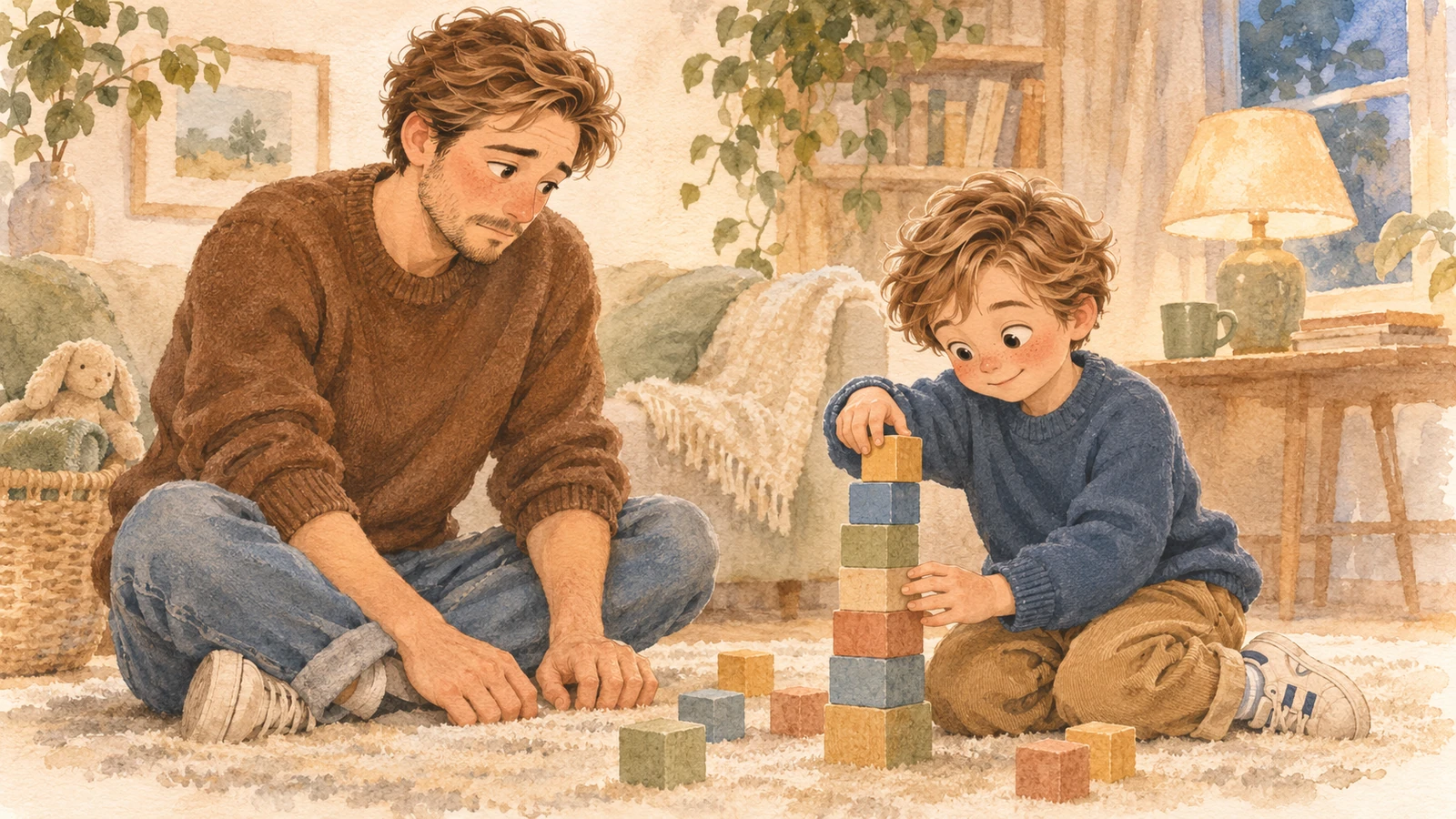
Oscar, my four-and-a-half-year-old son, was knocking down a tower of blocks and laughing. We had not long returned from the funeral of someone close to us. I was still sitting with my coat on my knees.
His laughter surprised me. A few hours earlier, he had cried. Now he was asking for a red block. I had a thought I wouldn’t have liked to hear aloud: so he had already forgotten.
Returning to play doesn’t measure attachment
A young child’s grief doesn’t necessarily look like continuous sadness. They may ask a question, cry, play and then return to what they miss. Their laughter doesn’t mean that the person no longer matters.
I was watching Oscar at my adult pace. He could return to a familiar game in the middle of an upsetting day. I didn’t need to interrupt his tower to check that his grief was still there.
That didn’t mean deciding for him that play was helping, or reading a hidden message into every block. He was also allowed to build a tower simply because he wanted to build one.
I could leave room for these moments to coexist without expecting the right expression of sadness. Tears weren’t a tribute he had to produce for me.
Answer when the question returns
Oscar asked whether the person who had died could see his building. I put down my coat. His question deserved an answer, even between bursts of laughter.
I could use simple words about death, without presenting it as sleep or a journey someone returns from. And distinguish what we know from what our family believes.
“When someone has died, their body doesn't work any more and they don't come back.”
“You can play and think about them. If a question comes back, you can ask me.”
I didn’t have to explain everything at once. Repeating an answer didn’t mean he hadn’t listened the first time. He might need to revisit it, with different words or in the same place.
If his distress becomes overwhelming, he withdraws for a long time or daily life is seriously disrupted, I can seek suitable support. Playing doesn’t rule out needing help.
Oscar looked for the red block, then asked me to sit beside the tower. I stayed on the floor with him. We didn’t have to choose between talking about the person and continuing to play.
Keep this handy
The situation
After a death, your child alternates between sadness, questions and play.
Try this
Allow play and remain available to answer simply when questions return.
- “You don't have to feel sad all the time to love that person.”
Keep in mind: Reactions vary. Overwhelming distress or lasting withdrawal calls for support.