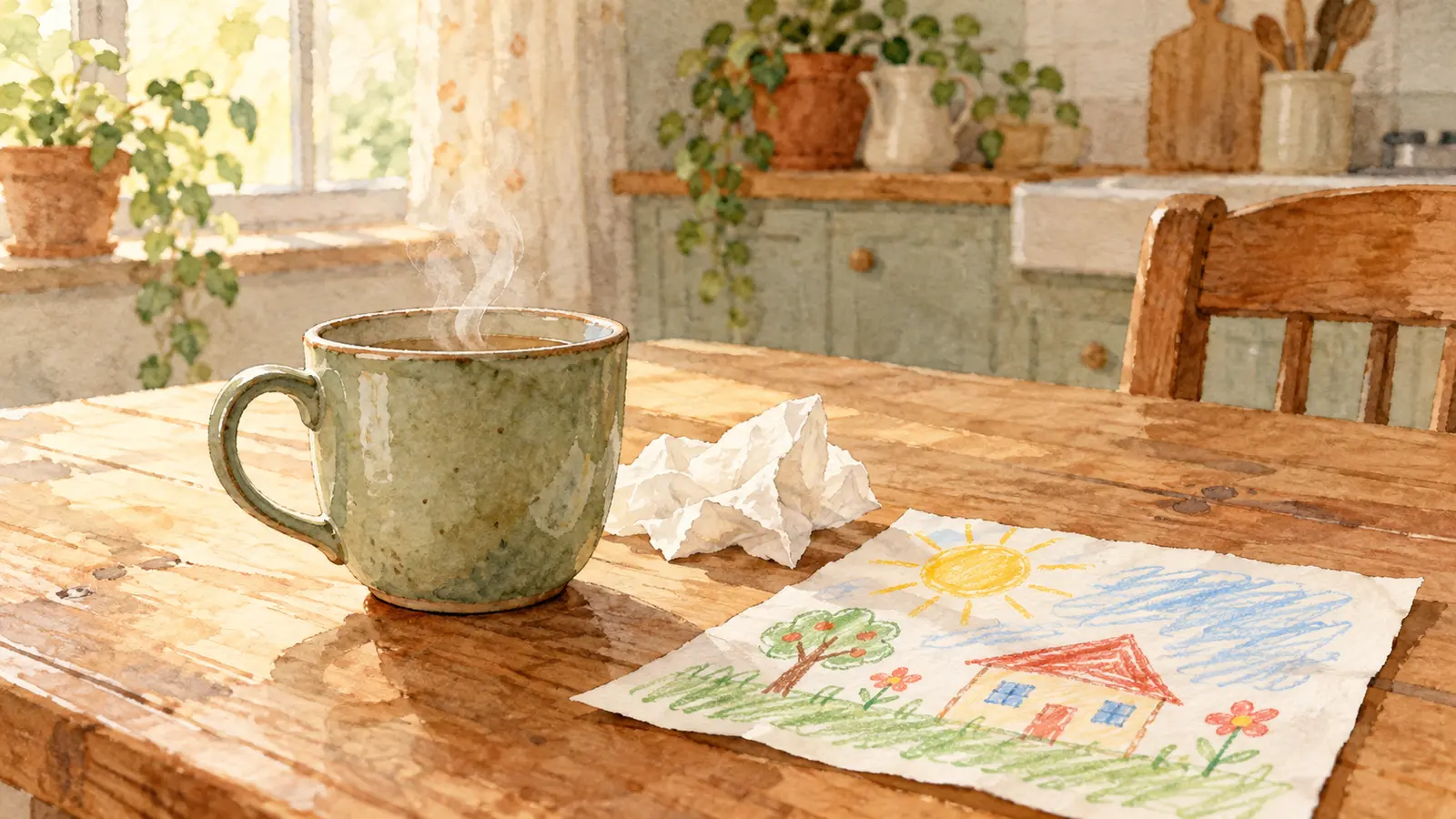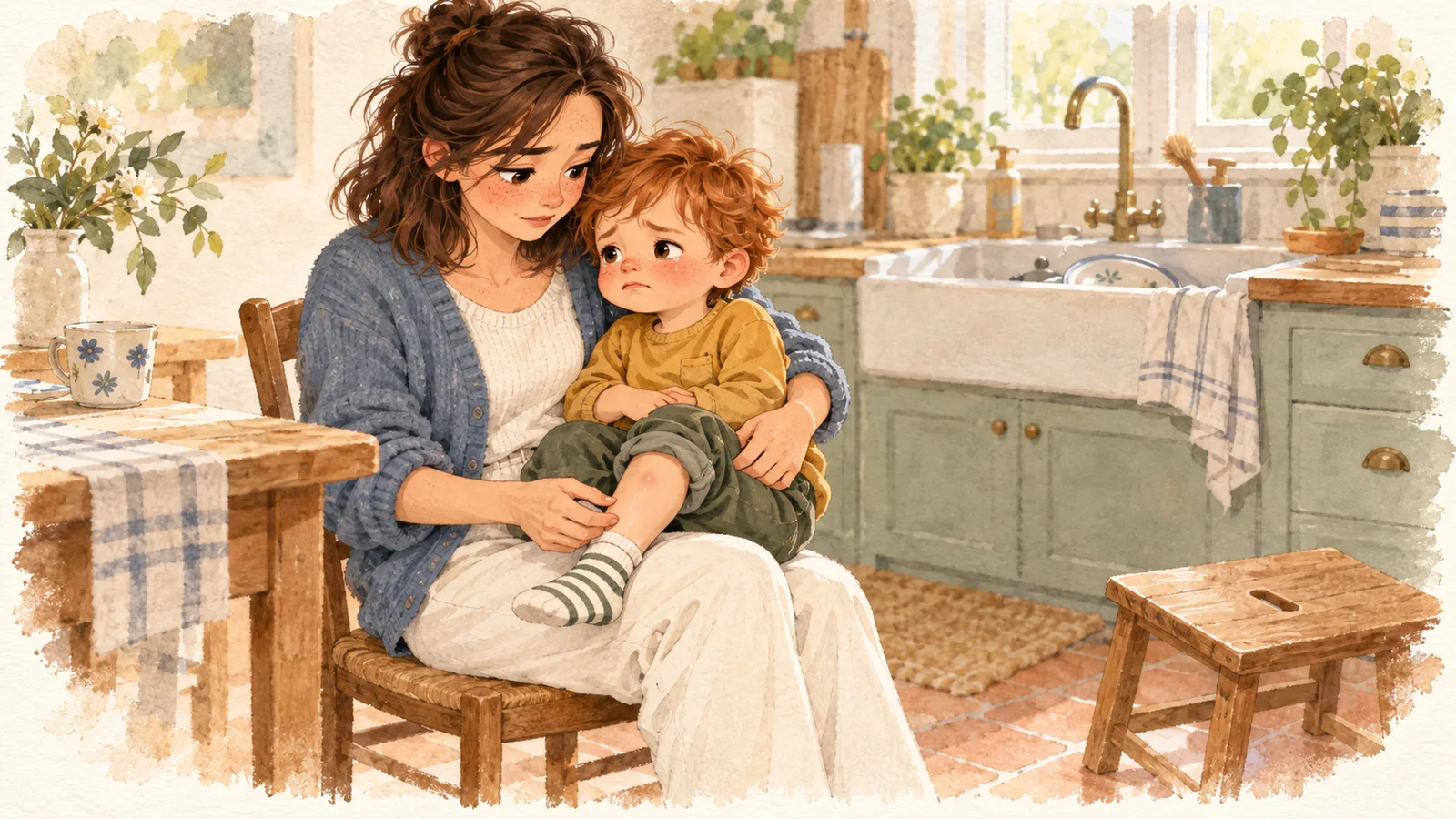
Malo, my almost three-year-old son, bumped his shin against the little stool while I was rinsing a plate. He cried out, then called me. “It really, really hurts!”
I had seen the bump and it hadn’t looked particularly hard. “You’re exaggerating” was already on the tip of my tongue.
I put the plate down.
A child’s pain cannot be measured by the volume of their crying. And my impression of a small bump didn’t tell me exactly what Malo was feeling.
Looking at the pain before judging the reaction
I asked him to show me where it hurt, then looked at his leg. A small mark was appearing. He also wanted to sit on my lap.
I could have translated that into “he mainly wants attention”. But needing me didn’t prove that he wasn’t in pain. Surprise, pain and the wish to be comforted could easily arrive together.
At almost three, Malo wasn’t giving me a precise measurement. His “really, really hurts” could be the phrase available to tell me that something had happened and he wanted me to stop.
I didn’t need to confirm a catastrophe. I could take his complaint seriously, check what had happened and stay close.
A few minutes later, he climbed down from my lap and went back to playing. That was reassuring in this scene. It wasn’t proof that he had been putting on an act.
Comforting without amplifying or dismissing
Sometimes my urge to play things down mainly comes from being busy. If I conclude too quickly that “it’s nothing”, I can carry on with what I’m doing. But I may also be asking him to try harder to convince me before I pause.
I can start with a simple response, without deciding for him how much it hurts.
“You bumped yourself. Show me where it hurts.”
“I’m here. Let’s sit down for a moment and have a look.”
Giving attention doesn’t replace any care that is needed. If a child cannot put weight on their leg or if the pain is severe or getting worse, they need urgent medical assessment. Persistent pain or a worrying injury also deserves medical advice, even if the child has cried a lot over a small bump before.
Once Malo felt reassured, I showed him the stool sticking out and we pushed it back under the table. Then I could return to my plate.
He hadn’t needed to convince me to take him seriously. The plate could wait a few minutes.