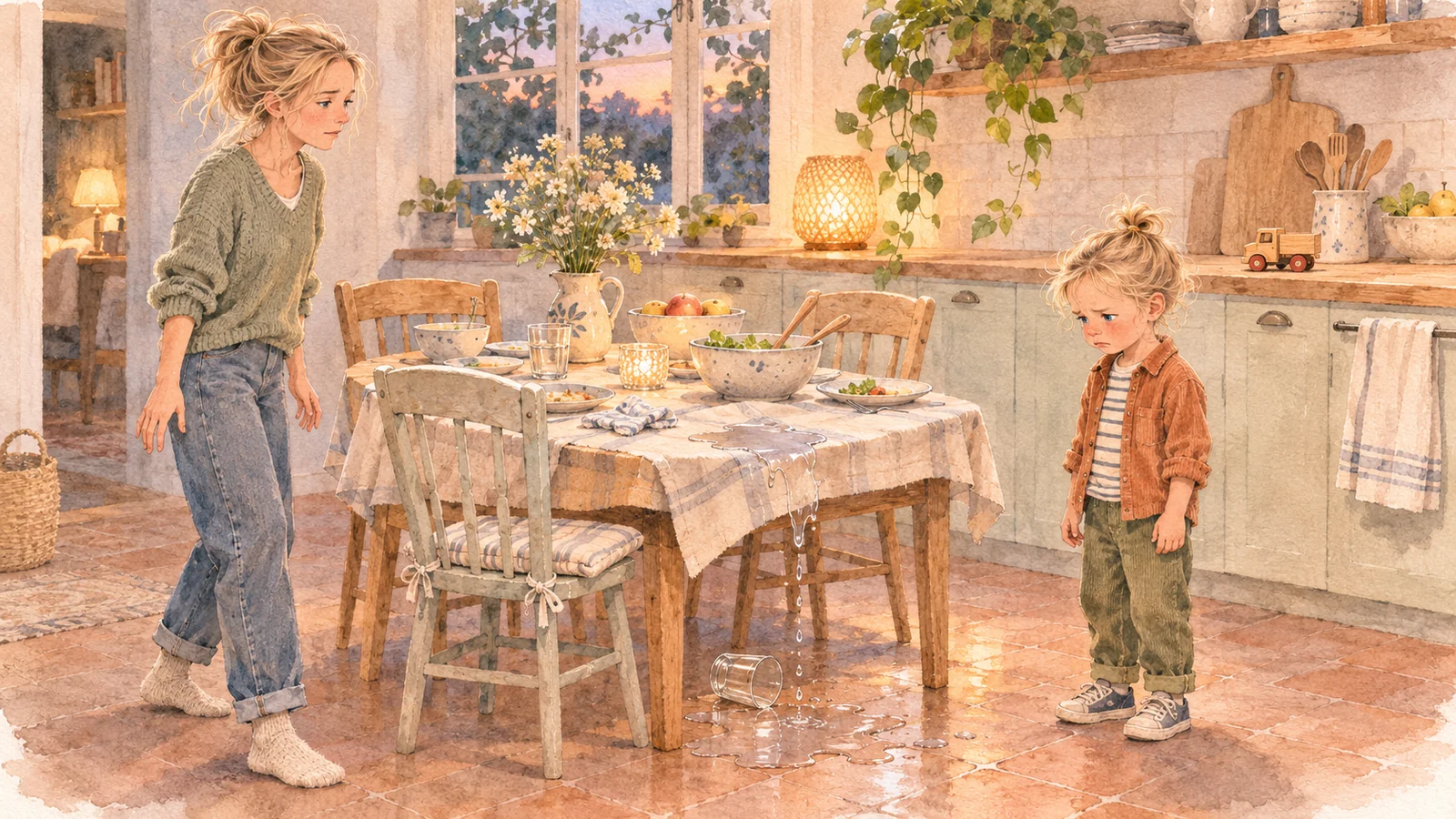
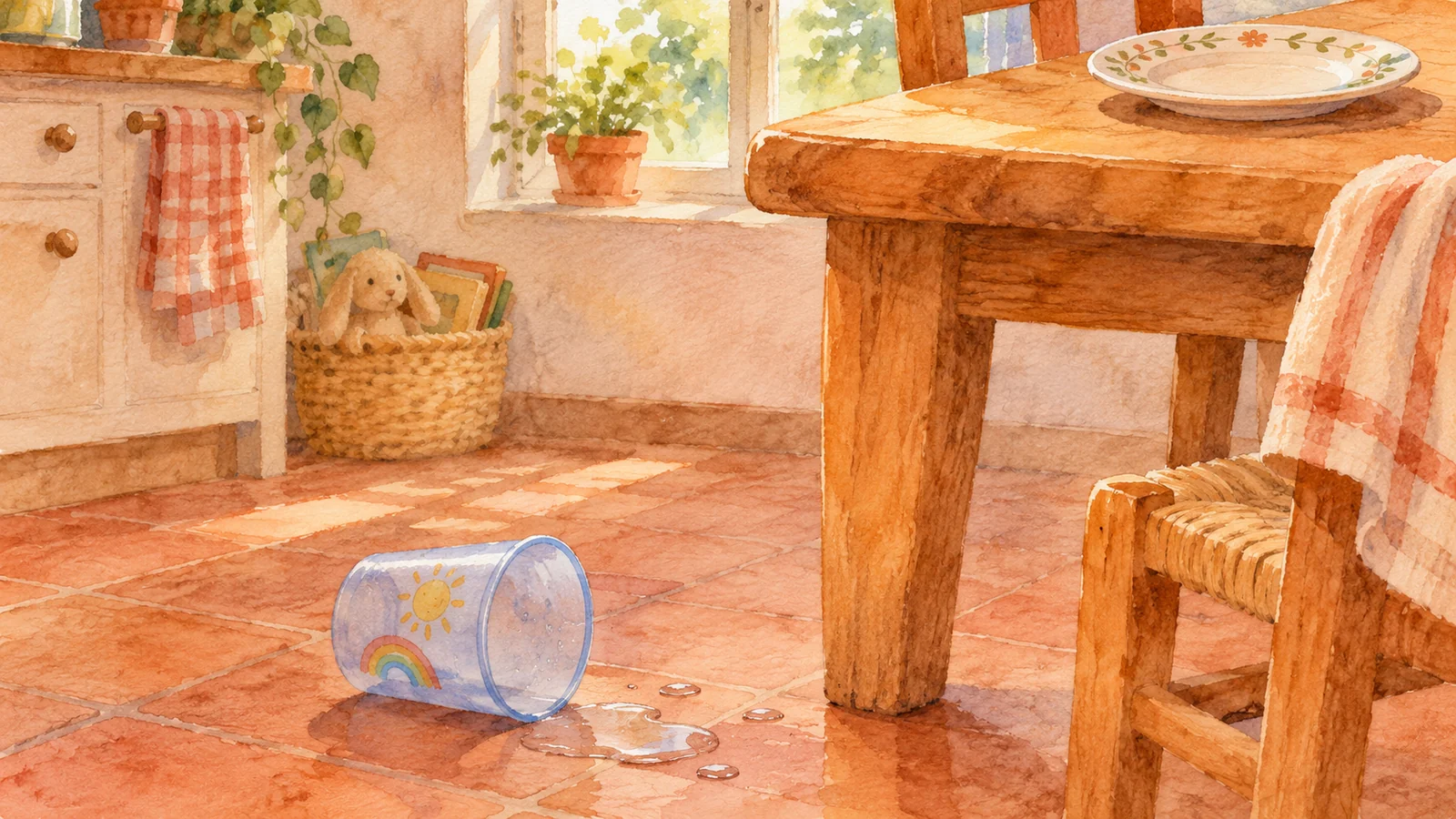
Gabriel is nearly four. His mum, Marie, has told him several times that the truck stays on the floor. While she turns to get the plates, Gabriel puts it on the table and gives it a push. It hits the water jug, which tips over with a clatter. Water spreads to the edge and starts running onto Gabriel’s knees.
Marie catches the truck just before it falls. She bends to put it on the floor. Gabriel rushes to get it back and hits her hard on the forearm. “Ow!” Marie puts the truck down behind her.
Her arm hurts, she’s exhausted and she can feel herself about to lose her temper. For a second she thinks of smacking him. She takes a step back and says, louder than she meant to, “I won’t let you hit me.” Water is still dripping onto the floor. She’ll mop it up once she’s caught her breath.
This scene is fictional. The feeling of running out of options will be familiar to many parents. Some grew up with smacking, being sent to the corner or having things taken away. Their own parents often believed they were teaching essential rules. What feels normal varies across families, generations and societies, and it changes within countries too.
In the middle of the noise, stopping the action matters. Then comes another question. What will the child be able to do next time they’re angry?
1. Why move away from corporal punishment?
What stops in the moment
A smack may interrupt a child through surprise, pain or fear. They might also comply to avoid another one. Understanding why a rule exists, finding another way to respond when upset and using it without an adult around are skills that develop with time and practice.
Children also watch how adults handle conflict. They may pick up the idea that force makes people give in. This is one plausible explanation alongside stress and patterns of interaction that escalate. Research cannot trace that mechanism in every child.
What studies find over time
Research links physical punishment to more aggression and disruptive behaviour, as well as emotional and relationship difficulties. It has found no lasting educational benefit. These are average differences between groups. A child’s own experience depends on many other factors, including the stability of the adults around them and the support they receive.
A correlation means two things tend to go together. A prospective study can show that measured exposure came before the later outcome and account for the child’s starting behaviour. That matters because children who already behave aggressively may be punished more often. Quasi-experimental analyses, such as comparisons between children with similar starting characteristics, can reduce some sources of bias. Unmeasured differences can remain. Agreement across methods matters here because assigning children to be hit would be unethical.
Imaging research offers a clue to how some children process signs of threat. Surveys of adults find links with certain difficulties many years after childhood. These studies answer different questions, and their limits matter.
The World Health Organization estimates that around 1.2 billion children aged 0–18 experience physical punishment at home each year worldwide. It recommends protecting children and helping families learn nonviolent ways of setting limits. [6]
What the law says and how to respond if you’ve hit your child
As of 5 November 2026, France has required parental authority to be exercised without physical or psychological violence since its law of 10 July 2019. Sweden banned corporal punishment in 1979. Scotland abolished its defence on 7 November 2020, and Wales on 21 March 2022. In England, a limited defence of reasonable punishment remains for some cases, including common battery. Section 58 of the Children Act 2004 excludes the defence for more serious offences, including assault occasioning actual bodily harm. The rules depend on the jurisdiction. [7]
If you’ve hit your child, first make sure they’re safe and have any possible injury assessed. Once you’re calm enough to talk, you might say, “I hit you. I shouldn’t have. I’m sorry. Even when I’m angry, it’s my job to keep my hands to myself.” Your child may need time or space. They don’t have to reassure you or forgive you straight away.
Before the next hard moment, work out who can take over and how you’ll pause the interaction. Make sure your child is safe and supervised as needed, then take a few seconds to step back. If you’re afraid you might hit them again or it keeps happening, speak promptly to a healthcare professional or a local family support service. Call emergency services if there is immediate danger. [6] [8]
2. Taking things away, sending children aside and setting consequences
What kind of consequence are we talking about?
In everyday language, a punishment imposes something unpleasant or removes something enjoyable after a behaviour. Here, a sanction means a consequence chosen by the adult. A natural consequence happens without the adult’s intervention, as when paper tears if you pull it. We step in before a child learns about the dangers of traffic or a hot pan that way.
A logical consequence is chosen by the adult and connected to what happened. If the truck is thrown, you put it away until play can be safe again. Positive reinforcement adds something after a behaviour to make it more likely to happen again. It might be specific attention. “You put the truck down when I asked. We can keep playing.”
Removing an object to stop a dangerous action is first a safety measure. Explain when and how play can resume. Taking away a privilege can make sense when the connection is clear. If the agreed rule is to sit while playing on the tablet and the child runs with it, the game can end. Cancelling a bedtime story over an argument that happened in the morning adds a consequence that’s hard to connect, especially for a young child. Meals, sleep and comfort stay available.
The corner and time-out
In behavioural programmes, time-out means briefly removing access to an activity or attention after a defined behaviour. It might involve stepping away from play for a short time in a safe place, with a familiar rule, a predictable return and an available adult. Staying with an overwhelmed child to help them settle serves a different purpose. Locking a child in, threatening to leave, humiliating them or withholding comfort in severe distress falls outside the protocol studied.
If a family uses time-out, it makes sense to reserve it for a few specific behaviours with a child who understands the rule. It belongs within a relationship with plenty of play, attention and encouragement. On returning, the adult can show what to do next. Babies need protection and adults who respond to their signals. Research on older children doesn’t support applying time-out to babies. [8]
Shouting, threats and rewards
A loud “Stop!” can protect a child running towards the road. Once the danger has passed, a short, firm instruction can tell them what to do next. Insults, repeated threats and humiliation target the person. A brief reprimand can elicit an immediate response without supporting the use of harsh verbal discipline. [8] [9]
Points or stickers can help a child practise a specific habit, such as hanging up their coat. Pick something they can already manage, give feedback soon and keep the system temporary. You can fade the points and continue to notice progress. A chart cannot supply a skill the child hasn’t developed. If everything turns into bargaining, revisit how hard the task is and what help they need. [8] [12]
To judge a method, ask what changes. Does the child stop, do it less often, understand the rule or begin to act independently? How do your interactions feel over the following weeks? Improvement on one measure doesn’t tell you what happened on the others.
3. Setting limits that help children learn
Stop the action, show what to do, then come back to it
You can say no, move a dangerous object, separate children who are hitting or leave when you said you would despite protests. A limit can stand while the child thinks it’s unfair. Once everyone is safe, give them something concrete to do. “The truck rolls on the floor. If you want to throw, use the foam ball.”
Before. Notice when tiredness, waiting or noise make cooperation harder. Put the shoes within reach, give a warning before leaving the park and offer one instruction at a time. Small choices within clear limits give children a say where there’s room for one. When to leave can still be the adult’s decision.
During. Stop the action and protect the person who was hurt. Acknowledge anger and hold the limit in the same breath. “You wanted to keep playing. I won’t let you hit.” The discussion can wait until the child can take it in. The guide to emotions looks at how this ability develops.
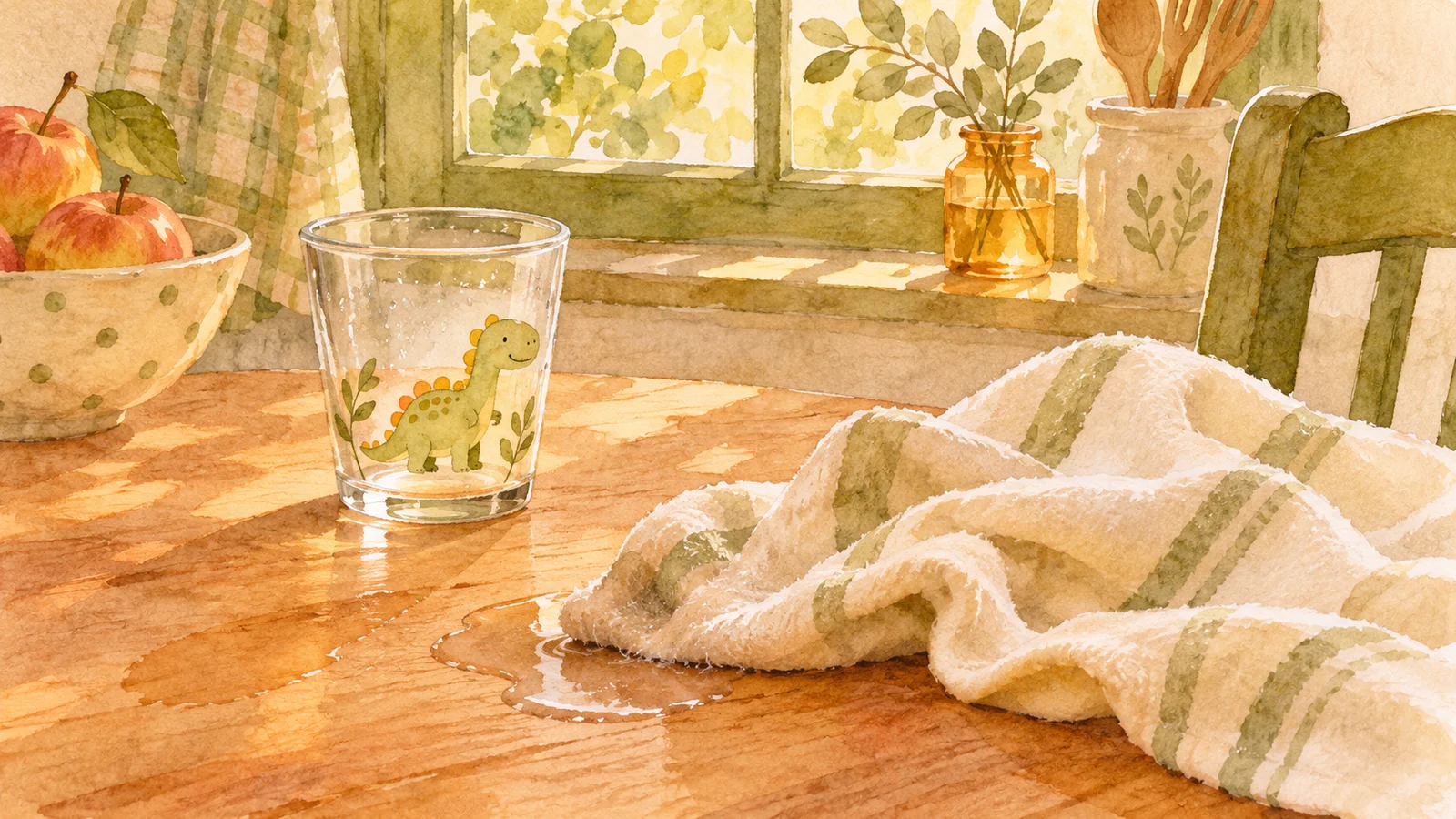
After. Show a possible response and notice when they use it. If they spill water, they can fetch a towel or help mop it up. If they break something, they can help mend it once any dangerous pieces have been cleared away. If they hurt someone, look after that person first and offer help they can accept or decline. An apology can be sincere even if suggested. Forcing a child who’s still upset to say sorry can close the conversation without addressing what happened. Adults can set an example by revisiting their own reactions.
Five everyday situations
| Situation | What you could do | What your child can learn |
|---|---|---|
| They throw a hard toy. | Put it aside and offer a soft ball in a suitable place. | Safety comes first. There is a place and an object for throwing. |
| They hit another child. | Stop the action and protect the other child. Offer a way to make amends when everyone is ready. | We keep our hands to ourselves and look after other people. |
| They draw on the wall. | Get some paper and clean up together in a way they can manage. | I can help put things right. |
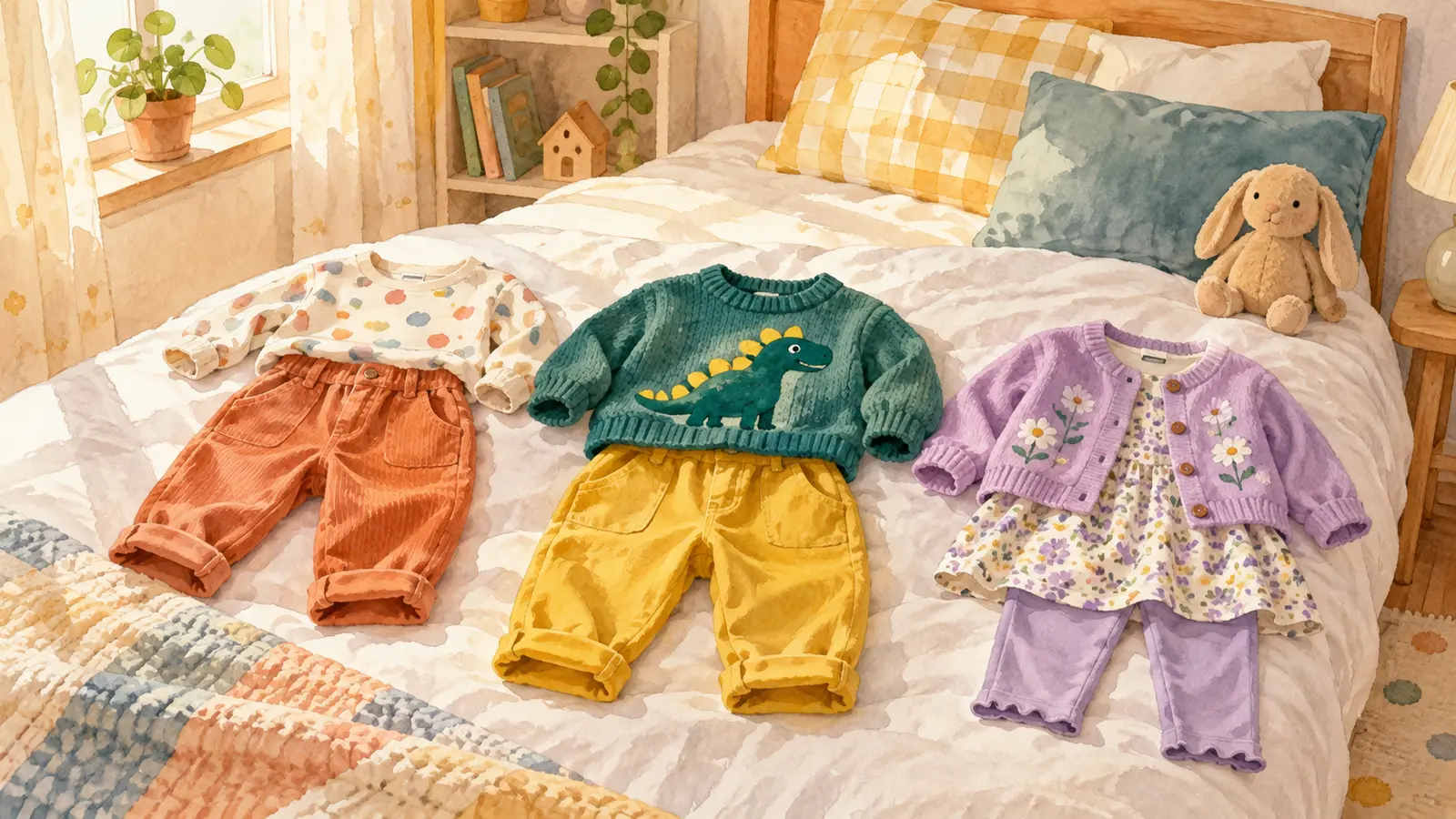
| They refuse to get dressed. | Keep the departure time, offer two suitable outfits and help them put on the one they choose. | Adults make some decisions. I can take part. |
| They scream in frustration. | Hold the limit. Stay available and wait before discussing it. | A strong feeling can pass without anyone getting hurt. |
These approaches take time and sometimes need adapting. A child might need a picture prompt, a shorter instruction, a quieter place or help communicating. If behaviour becomes dangerous, very frequent or exhausting to manage, a professional can help identify triggers and find suitable support. A Cochrane review found short-term benefits of group parenting programmes for children aged three to 12 with conduct problems. It tells us less about how long those benefits last. [15]
Frequently asked questions
Can an occasional light smack really do harm?
Studies can’t quantify what one incident does to one child. They haven’t identified a safe threshold or a lasting benefit that would justify choosing to smack. [1] [2] [6]
I’ve already hit my child. How can I repair the relationship?
Make sure they’re safe, acknowledge what you did without blaming them and explain what you’ll do differently. Repair also shows in what you do next, including stepping back or asking another adult to take over before you lose control.
Can being sent to the corner or given a time-out traumatise my child?
The research doesn’t establish that a brief, properly implemented time-out causes trauma. It doesn’t cover every kind of isolation or every child. If separation causes severe distress, stay available and reconsider the approach. [9] [10]
Can I take away a toy, screen or privilege without feeling guilty?
Yes, if it’s proportionate, understandable and connected to what happened. Tell the child when the activity can resume and show them how to use it safely.
Won’t my child get out of control if I never punish them?
Consistent boundaries, expectations they can meet and help succeeding all provide structure. Parenting programme studies support several nonviolent ways to reduce difficult behaviour. [12] [15]
For the next difficult moment
You can hold a firm limit without making a child suffer for crossing it.
Marie can set the jug upright and ask Gabriel to help mop up the water when he’s ready. Next time he’s angry, he might still need her to stop him. Over time he can learn to understand what he did, look after other people and find another way to respond. That’s progress that “he did as he was told” doesn’t capture.
Keep this handy
The situation
The rules have been broken and you’re at a loss for how to respond.
Try this
Stop the behaviour, state the limit clearly, offer an acceptable alternative and come back to what happened once your child is ready to understand.
Keep in mind: A firm, respectful boundary can teach more than a punishment with no connection to the behaviour.
Scientific references and official sources
- Gershoff, E. T., & Grogan-Kaylor, A. (2016). Spanking and child outcomes: Old controversies and new meta-analyses. Journal of Family Psychology, 30(4), 453–469. DOIPubMed
- Heilmann, A., Mehay, A., Watt, R. G., Kelly, Y., Durrant, J. E., van Turnhout, J., & Gershoff, E. T. (2021). Physical punishment and child outcomes: A narrative review of prospective studies. The Lancet, 398(10297), 355–364. DOI
- Cuartas, J., Gershoff, E. T., Bailey, D. H., Gutiérrez, M. A., & McCoy, D. C. (2025). Physical punishment and lifelong outcomes in low- and middle-income countries: A systematic review and multilevel meta-analysis. Nature Human Behaviour, 9, 1365–1379. DOI
- Cuartas, J., Weissman, D. G., Sheridan, M. A., Lengua, L., & McLaughlin, K. A. (2021). Corporal punishment and elevated neural response to threat in children. Child Development, 92(3), 821–832. DOIPubMed
- Afifi, T. O., Ford, D., Gershoff, E. T., Merrick, M., Grogan-Kaylor, A., Ports, K. A., MacMillan, H. L., Holden, G. W., Taylor, C. A., Lee, S. J., & Peters Bennett, R. (2017). Spanking and adult mental health impairment: The case for the designation of spanking as an adverse childhood experience. Child Abuse & Neglect, 71, 24–31. DOI
- World Health Organization. (2026). Corporal punishment of children and health. WHO
- France, loi n° 2019-721 et article 371-1 du Code civil. Sweden, Children and Parents Code, ch. 6 § 1. Scotland, Children (Equal Protection from Assault) (Scotland) Act 2019. Wales, Children (Abolition of Defence of Reasonable Punishment) (Wales) Act 2020. England, Children Act 2004, s. 58. France (2019)Code civilSverigeScotlandWalesEngland
- Sege, R. D., Siegel, B. S., & American Academy of Pediatrics. (2018). Effective discipline to raise healthy children. Pediatrics, 142(6), e20183112. DOIPubMed
- Leijten, P., Gardner, F., Melendez-Torres, G. J., Knerr, W., & Overbeek, G. (2018). Parenting behaviors that shape child compliance: A multilevel meta-analysis. PLOS ONE, 13(10), e0204929. DOI
- Roach, A., McLean, R., Mendoza Diaz, A., Hawes, D., & Dadds, M. (2025). Time-out under scrutiny: Examining the relationships among the discipline strategy time-out, child well-being and attachment and exposure to adversity. The British Journal of Psychiatry, 227(2), 538–544. DOI
- Wang, M.-T., & Kenny, S. (2014). Longitudinal links between fathers’ and mothers’ harsh verbal discipline and adolescents’ conduct problems and depressive symptoms. Child Development, 85(3), 908–923. DOIPMC
- Leijten, P., Gardner, F., Melendez-Torres, G. J., van Aar, J., Hutchings, J., Schulz, S., Knerr, W., & Overbeek, G. (2019). Meta-analyses: Key parenting program components for disruptive child behavior. Journal of the American Academy of Child & Adolescent Psychiatry, 58(2), 180–190. DOI
- Havighurst, S. S., Wilson, K. R., Harley, A. E., Prior, M. R., & Kehoe, C. (2010). Tuning in to Kids: Improving emotion socialization practices in parents of preschool children. Journal of Child Psychology and Psychiatry, 51(12), 1342–1350. DOIPubMed
- Smith, C. E., Anderson, D., & Straussberger, A. (2018). Say you’re sorry: Children distinguish between willingly given and coerced expressions of remorse. Merrill-Palmer Quarterly, 64(2), 275–308. DOIWayne State University
- Furlong, M., McGilloway, S., Bywater, T., Hutchings, J., Smith, S. M., & Donnelly, M. (2012). Behavioural and cognitive-behavioural group-based parenting programmes for early-onset conduct problems in children aged 3 to 12 years. Cochrane Database of Systematic Reviews, (2), CD008225. DOICochrane