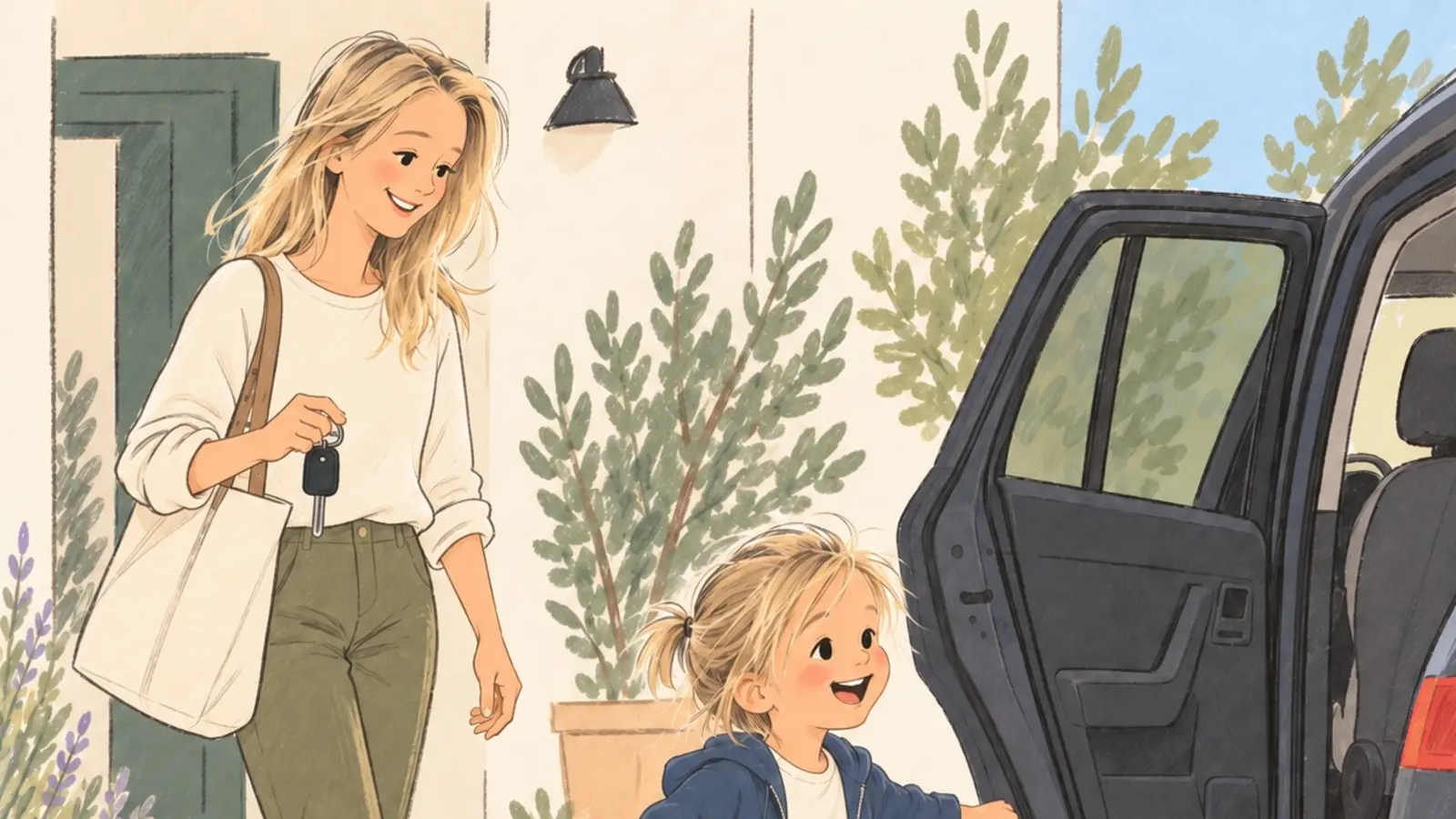
This morning, Gabriel, 3, refuses to put his shoes on. His mum, Marie, has already explained three times that they need to leave. She tries a different approach:
“Would you like to put your left shoe on first, or your right?”
Gabriel thinks for two seconds.
“Neither!”
Well, that was a short negotiation.
Giving a child a choice is often presented as an almost magical trick. You offer two options, they choose, everyone is happy. Real life is rarely that simple.
Yet behind this little technique lies something far more interesting than a way of getting children to cooperate: their need to have a genuine say in what happens to them.
What if the choices we offer were less about avoiding conflict and more about helping children become independent, trust their own abilities and, gradually, manage their emotions?
1. Why do children need to choose so much?
Having a say in their own lives

A three-year-old chooses neither the time they get up nor the time they leave for nursery. They do not decide when their game is interrupted, when they have to brush their teeth or when they go to bed, either.
So when they insist on choosing their own cup, their shoes or the order in which they put their socks on, they may not simply be trying to make life difficult. Sometimes, it is one of the few decisions that morning that really belongs to them.
Between the ages of 2 and 4, children gradually assert their preferences and discover that they can influence their surroundings. The familiar “I do it myself!” is part of this developing autonomy.
In psychology, autonomy does not mean doing whatever you want without any constraints. It includes the feeling of acting on your own intentions and taking part in things that concern you.
A child who chooses their pyjamas has not taken over the household. They have simply had a little control over their own life.
And that feeling matters.
And what about big feelings?

Let’s return to Gabriel.
Since waking up, he has had to finish his breakfast, leave his cars to get dressed, brush his teeth and get ready to go out. All these requests are perfectly reasonable. But from his perspective, almost everything has been decided for him.
When it is time to put his coat on, he falls apart.
Tiredness, hunger, difficult transitions or simply wanting to keep playing could, of course, explain his reaction. But feeling unable to decide anything can add another layer of frustration.
Offering a choice can sometimes make a requirement a little easier to accept by giving a child genuine room to manoeuvre.
Gabriel cannot decide to stay at home all morning, but he can choose which toy to take. He cannot decide to skip brushing his teeth, but he can choose to start on his own or with Marie’s help.
These little choices do not remove obligations. They simply mean that the adult does not have to dictate every detail.
The timing of a choice matters a great deal, too.
Before a potentially frustrating situation, a little initiative can help with the transition:
“We’ll be leaving soon. Would you like to take your truck or your comfort toy?”
During a big emotional outburst, however, comparing options can become too difficult. An overwhelmed child may chiefly need calm, time and the reassuring presence of an adult. Offering a cuddle or asking whether they would like us to stay close can be useful, but there is no point piling on questions if they cannot answer.
After the upset, once they are ready again, a small choice can help them return to an activity at their own pace.
The aim, then, is not to turn every emotion into a decision-making exercise. It is to create an everyday environment in which children can gradually exercise their autonomy while getting support when they need it.
2. How can we offer choices in everyday life?
Simply presenting two options is not enough to make a child cooperate. How we present them, how many there are and the moment we choose can all matter.
And some research findings are rather surprising.
The surprising second-option trick
When we ask a young child:
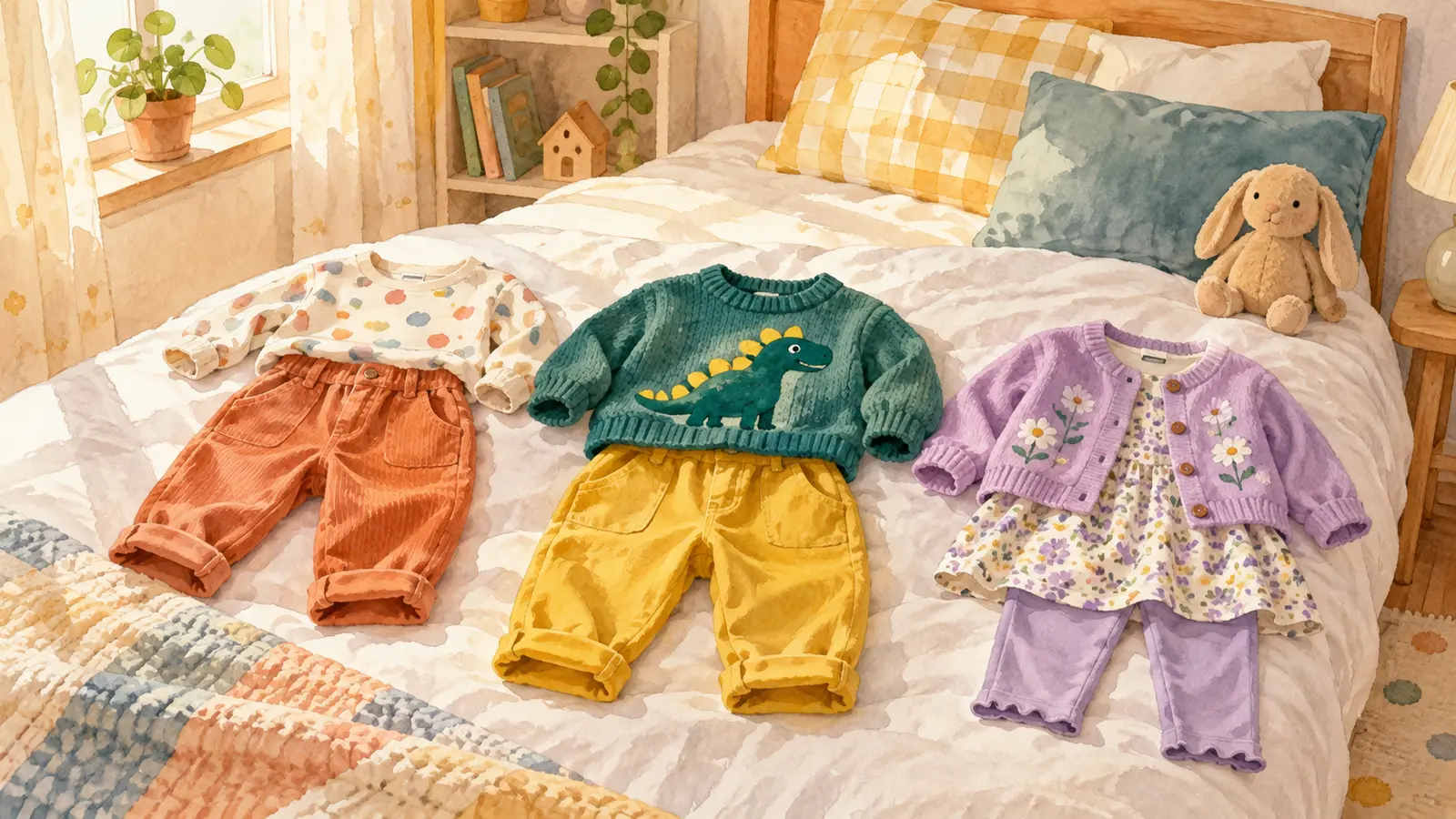
“Would you prefer the blue trousers or the green trousers?”
They may say “the green ones”, even if they initially seemed drawn to the blue pair.
So should we always put our preferred option second?
Not necessarily. The order of the options can influence what toddlers say, not necessarily what they actually prefer.
For small, low-stakes decisions, we can try offering the option that suits us best last, provided both really are acceptable. It is an amusing trick, but certainly not a reliable rule for every child.
And when we want to discover a genuine preference, it may be better to show both options, let the child point or invite them to choose without steering their answer.
Do we really have to stick to two options?
We often hear that we should always offer young children exactly two options, or risk overwhelming them.
It is a practical guideline, but research suggests it needs some qualification.
Even so, we do not need to get 26 jumpers out every morning to let our children get dressed.
Choosing a sticker for fun, with no time pressure, is quite different from choosing an outfit when everyone is running late.
The useful question is not “How many options should I always offer?” but “How many options can my child easily compare in this situation?”
Two is often an excellent starting point, particularly for younger children or when they are tired. But more freedom can be entirely appropriate in other circumstances.
Five tips worth trying

1. Let them choose how, even when the requirement stays the same
Some things are decided by adults: brushing teeth, leaving for nursery, wearing a seat belt in the car.
But how they happen can sometimes be negotiable.
“Would you like to start brushing on your own, or shall I start?”
“We need to put the toys away. Would you like to do the cars or the books?”
The choice concerns a real part of the situation, without questioning what needs to happen.
2. Don’t insist on two options if a third would be perfectly acceptable
Marie shows Gabriel two jumpers.
“The red one or the blue one?”
“The yellow one!”
The yellow one is clean, suitable for the weather and within reach. Why say no?
Sometimes we cling to our two proposed options as though our child must follow the rules of a game we have just invented.
Yet when they suggest a reasonable third option, they are doing exactly what we hope to encourage: thinking and taking initiative.
Of course, not every suggestion is workable. But if the third option works just as well, it would be a shame to reject it on principle.
3. Make choices concrete and allow time for an answer
For a toddler, comparing two items of clothing they can see is often easier than answering an abstract question.
We can show the options, let them touch them or point.
Above all, we can give them a few seconds.
We sometimes ask a question, wait two seconds and then decide ourselves because the child has not answered. Yet choosing means understanding the options, comparing them and formulating a response.
When we are not in a hurry, that little wait is part of the learning.
4. Don’t turn every minute into a questionnaire
“Which plate? Which cup? Which spoon? Where would you like to sit? And the pasta, with sauce or without?”
In trying to let children decide everything, we risk making routines unnecessarily complicated.
A child does not need to take part in every decision of the day to develop autonomy.
It can even be reassuring when some things are simply organised by adults.
A few decisions that really matter to them are better than a stream of questions they did not particularly want to answer.
5. Sometimes, let them invent the whole solution
We often offer tightly framed choices: red or blue, apples or pears, drawing or a puzzle.
But when the situation allows, why not ask:
“What would you like to play?”
“How could we carry all these toys?”
“Have you got an idea for how we could put everything away?”
Autonomy is not just about selecting an option an adult has thought up. It also involves developing your own ideas, trying things, making mistakes and finding solutions.
Examples of meaningful choices
| Situation | An option to offer |
|---|---|
| It is nearly time to leave | “Would you like to take your truck or your comfort toy?” |
| It is time to get dressed | “Would you like to choose your clothes, or shall we choose together?” |
| Brushing teeth | “Would you like to start on your own, or shall I start?” |
| Tidying up | “Would you like to do the cars or the books?” |
| Bedtime | “Would you prefer a story in your bed, or on the sofa before going to sleep?” |
| A free afternoon | “What would you like to play today?” |
These suggestions only work if we are willing to accept the answers. Otherwise, it is better to say clearly what is going to happen than ask a question that is not genuine.
3. Giving children a say without giving up boundaries
“Would you like to go to bed?”
It sounds kind. But if bedtime is not negotiable, the child may say “no”, leaving us to explain that, actually, they did not really have a choice.
An adult would hardly appreciate being asked their opinion and then told their answer did not count.
Children don’t, either.
The difference between a real choice and a false choice
A real choice means the options offered are genuinely acceptable.
If we need to leave, asking “Would you like to stay home or go out?” is pointless when staying is not an option.
We can simply say:
“We need to leave. Would you like to take your scooter or walk?”
But we also need to acknowledge that not every problem can be solved by finding another alternative.
That morning, when Gabriel says “neither” about his shoes, Marie could keep offering more choices: blue shoes or brown, left foot or right, with help or without.
Yet Gabriel may simply have no wish to stop playing.
In this situation, acknowledging his frustration may be more useful than searching for ever more inventive wording.
“You wanted to keep playing. I understand. But we need to leave, so I’m going to help you put your shoes on.”
Respecting a child’s autonomy does not mean getting their agreement on every decision.
Adults remain responsible for safety, necessary care and family organisation. Children, meanwhile, can gradually make more decisions in the areas that concern them.
Some decisions belong entirely to them, including whether to accept a kiss or a cuddle. Physical affection should not be imposed simply to please an adult.
The challenge is to distinguish what children can decide alone, what we can decide together and what is still our responsibility.
The aim is not simply to get a “yes”
It is tempting to focus only on the little techniques that make daily life easier. Putting our preferred option second, limiting the alternatives, choosing our words carefully.
They can be useful, but they are not the real goal.
When children choose, they discover that their preferences matter, that they can take initiative and that they are able to participate in decisions affecting them.
They also gradually learn to accept some consequences, consider other people and understand that not every decision belongs to them.
Perhaps, ultimately, the most important question is not “How can I get them to choose the option that suits me?”
But rather:
“What could my child genuinely decide for themselves today?”
And to accept, from time to time, that their answer will be very different from the one we had in mind.
Even if we carefully put our preferred option second.
Frequently asked questions
What if my child refuses both options?
Start by looking at what they are really refusing. A child who does not want to leave the park probably does not have a problem with choosing their shoes.
Acknowledge their disappointment, then hold the boundary when necessary.
“You wanted to stay longer. I understand. But now we need to go home.”
You can then offer a little initiative if they seem ready, without multiplying negotiations. And if they still refuse, you can help them through what needs to happen.
What if my child uses choices to stall?
This is common during transitions, particularly at bedtime.
The child chooses a story, then wants another. They choose their pyjamas, then ask to change. Each decision becomes another opportunity to put off the moment they are dreading.
In this case, it is better to explain the framework clearly before offering a choice:
“We’re going to read one story before you go to sleep. You can choose which one.”
Once the story is over, the boundary remains the same, even if the child asks for another choice.
This does not necessarily mean they are trying to manipulate us. They may simply find it hard to stop something enjoyable.
At what age can we start offering choices?
As soon as a child starts expressing preferences, we can offer small decisions suited to their abilities.
Before age 2, that might be as simple as showing two toys and letting them point to one.
Between 2 and 3, concrete choices about clothes, stories or games become particularly accessible.
Between 3 and 5, many children can gradually explain their preferences and suggest their own solutions.
As they get older, we can entrust them with more complex decisions, taking their maturity and the situation into account.
These are only rough guides: a tired five-year-old may sometimes need options as simple as those for a two-year-old.
What if my child changes their mind after choosing?
It depends on the consequences of the change.
If they want the red book rather than the blue one and we have not started reading yet, why not?
But if the story is nearly over and they want to start again, we can hold a boundary:
“You’ve decided you would rather have had the other story. We can read it tomorrow.”
Learning to decide also means discovering that some choices are easy to change, while others involve more commitment.
The aim is not to punish a change of mind, but to gradually help children understand the consequences of their decisions.
How can I tell if I am offering too many choices?
There is no ideal number of decisions per day.
But if questions seem to irritate your child, they struggle to answer or routines drag on endlessly, it may be better to simplify.
We can decide the unimportant details ourselves and save genuinely meaningful decisions for our children.
Offering fewer choices does not mean respecting their autonomy less. What matters is giving them authentic opportunities to take part.
Scientific references
-
Castelo et al. (2022). Parent Provision of Choice Is a Key Component of Autonomy Support in Predicting Child Executive Function Skills. Frontiers in Psychology. Observational study of 366 preschool-aged children and executive functions. Read the study · DOI: 10.3389/fpsyg.2021.773492.
-
Meuwissen & Carlson (2019). An experimental study of the effects of autonomy support on preschoolers’ self-regulation. Journal of Applied Developmental Psychology. Randomised experiment involving 128 parent-child pairs; short-term findings during the interaction. Read the study · DOI: 10.1016/j.appdev.2018.10.001.
-
Bradshaw et al. (2025). Disentangling autonomy-supportive and psychologically controlling parenting: A meta-analysis of self-determination theory’s dual process model across cultures. American Psychologist. Meta-analysis of 238 samples and 126,423 participants; associations that do not, by themselves, establish causation. Published in a journal issue in 2025, first published online in 2024. Read the study · DOI: 10.1037/amp0001389.
-
Sumner et al. (2019). Cake or broccoli? Recency biases children’s verbal responses. PLOS ONE. Studies examining how the order of alternatives influences young children’s responses. Read the study · DOI: 10.1371/journal.pone.0217207.
-
Castelo, Kim & Carlson (2023). More is more: toddlers do not show choice overload. Frontiers in Developmental Psychology. Two experiments on toddlers’ preference for choice, including among many alternatives. Read the study · DOI: 10.3389/fdpys.2023.1317426.