I was looking for a screen-free toy for Gabriel, my almost-four-year-old son. He loves stories on journeys, but I didn’t want to hand him my phone every time he got bored.
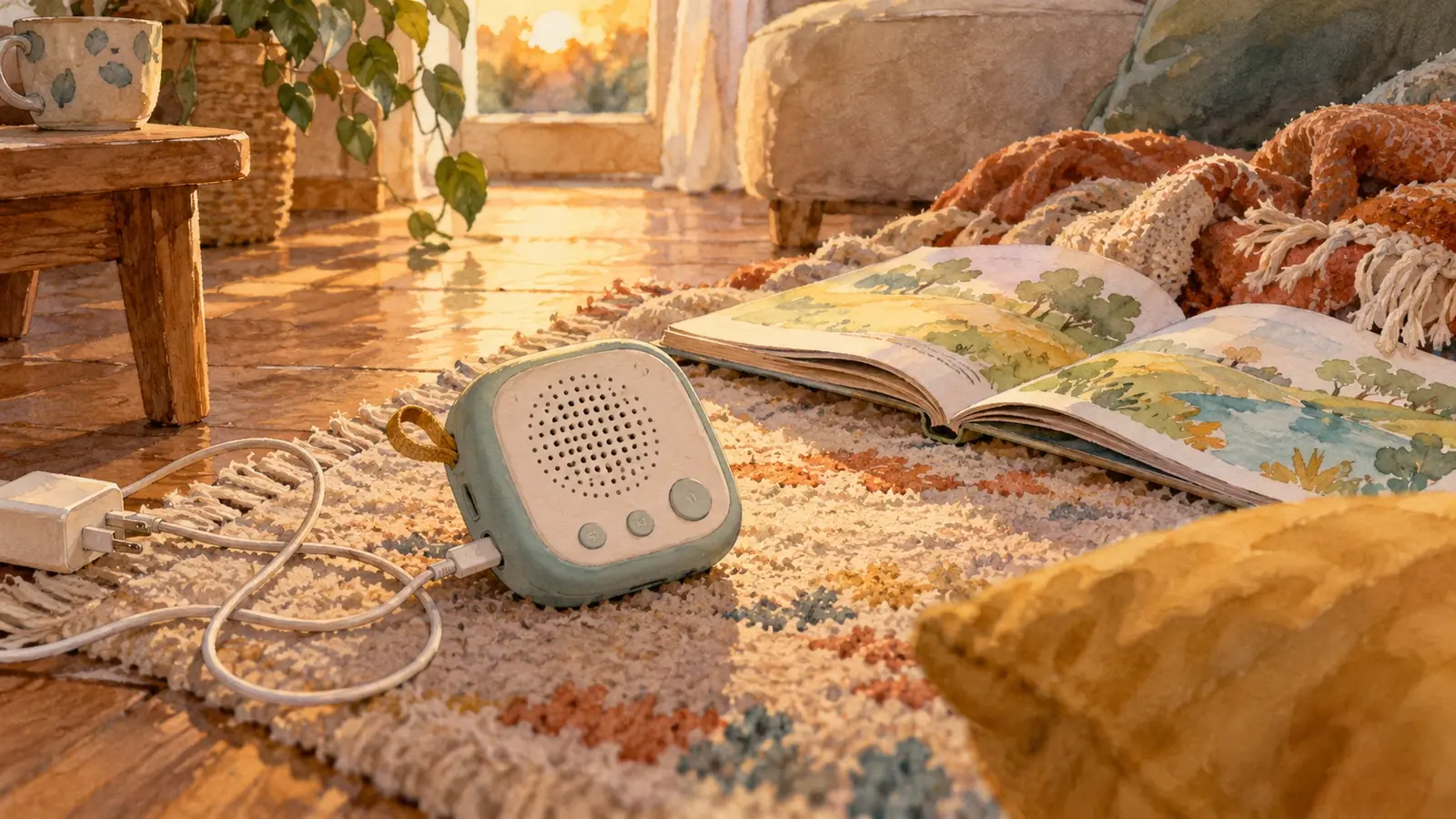
A little audio player for children seemed perfect. No videos, stories he could choose himself and buttons small hands could manage. I felt rather pleased with my discovery.
Once home, I found the charging cable, the settings to sort out and the stories to download. Gabriel just wanted to know when he could press play.
I had bought a screen-free toy. I had also bought another electronic device, complete with one more cable for the drawer where cables apparently go to multiply.
Screen-free doesn’t mean technology-free
I realised I’d mixed up two wishes: avoiding videos and simplifying our belongings. The audio player could satisfy the first without necessarily satisfying the second.
That isn’t a contradiction. A battery-powered device that tells stories can be useful on journeys. But the words “screen-free” don’t guarantee that Gabriel will love it, find it easy to use or stop needing us around.
When we finally tried it, Gabriel listened for five minutes. Then he restarted the same story because he wanted to hear the character’s voice again. I had to resist pointing out the ten other stories waiting in the library.
Buying for the activity, not the label
If I were choosing again, I’d start less with the product label and more with what Gabriel already enjoys. Listening to the same stories over and over? Looking through books? Inventing adventures with his toy cars?
I’d check a few practical things too: does it work offline during a journey, can he operate it himself, is extra content paid for and how long does the battery last? An “educational” gadget that needs twenty minutes of setup before every trip may lose some of its charm.
I’d also remember that a book, a few figures or a story we tell together might work just as well. It isn’t a competition between electronic toys and wooden ones.
In the end, Gabriel asked for the player on our next journey. He liked listening to the stories and choosing one by himself. The toy had found its place without needing to be the perfect solution.
I wanted less screen time. That was a good enough reason. For everything else, I simply gained another charging cable.
Keep this handy
The situation
A toy can be screen-free and still be an electronic device.
Try this
Notice which toys your child actually uses and adjust what is on offer without aiming for perfect tidiness.
- “Which ones shall we play with now, and which shall we put aside?”
Keep in mind: There is no ideal toy count that works for every child or every day.