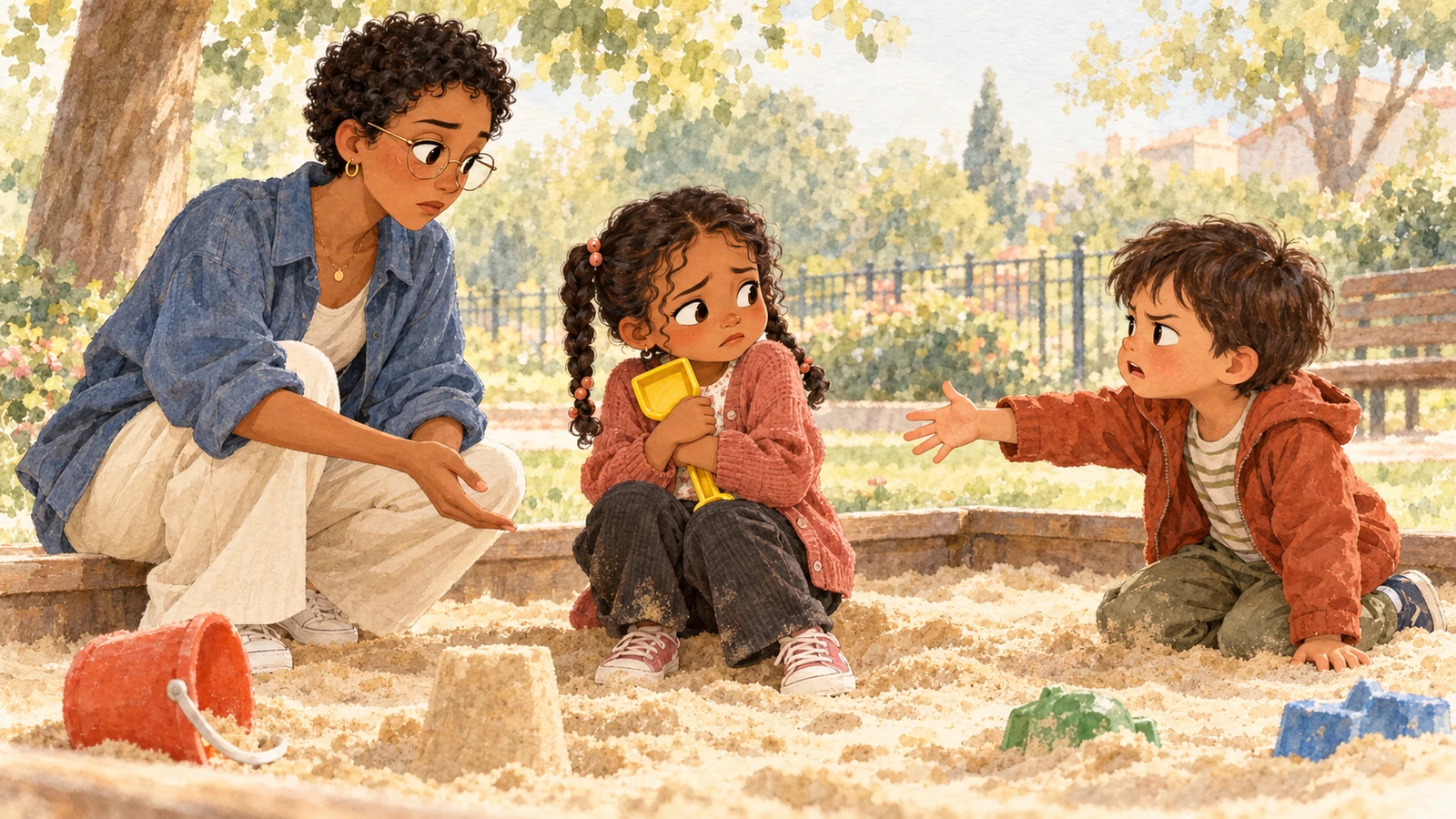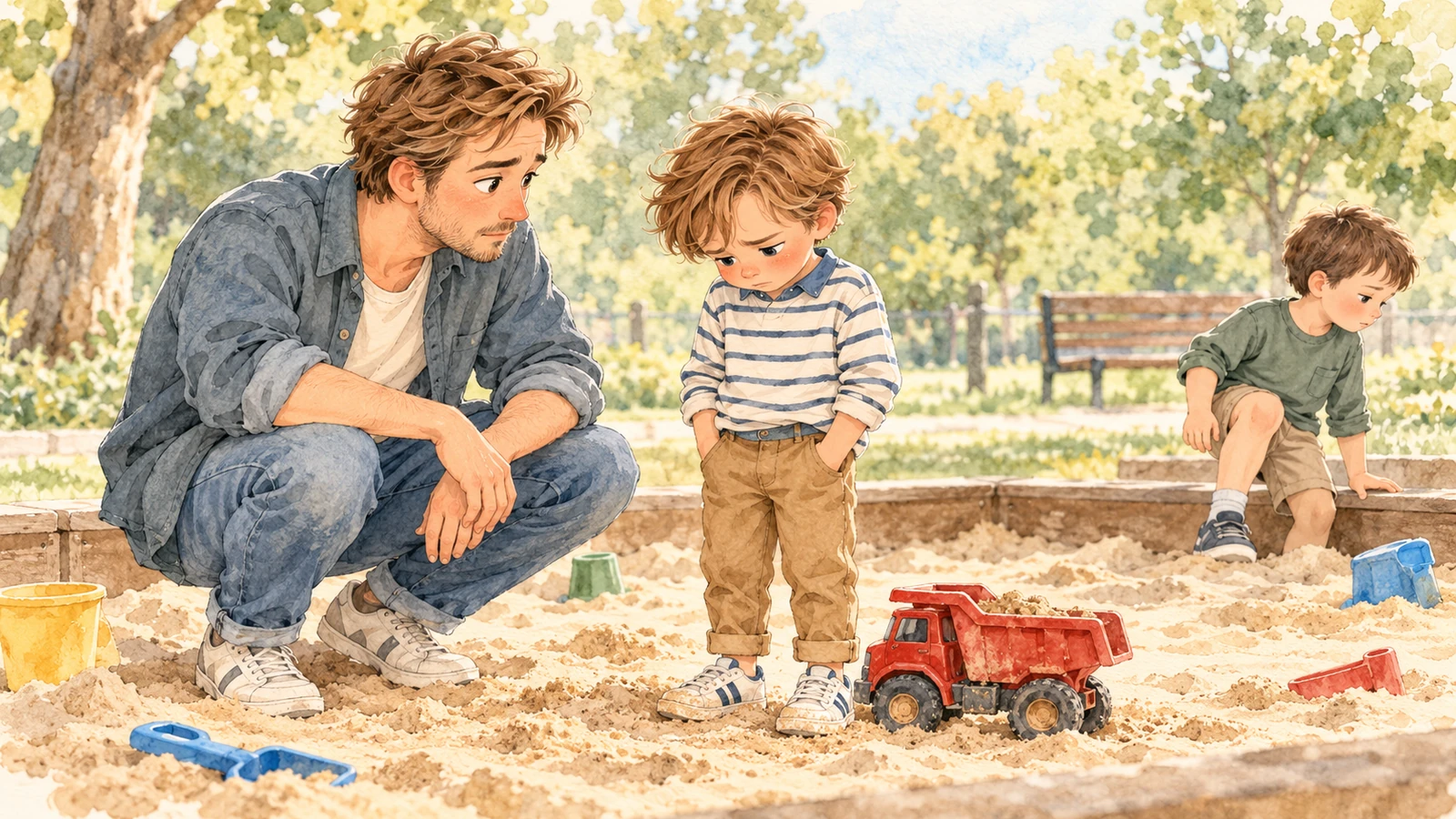
I was talking to a friend at the park when Gabriel, my almost-four-year-old son, started repeating my first name. He had just heard my friend call me Marie. He decided to try it too, getting louder each time.
I said “wait” in the middle of my sentence and kept talking. He started again. I knew I was going to turn to him. From where he stood, my answer could easily have meant that he needed to keep calling me.
Letting him know his turn is coming
Gabriel wanted to show me something near the bench. I could have stopped the conversation straight away. I could also show him that I had noticed and take a few seconds to finish.
Waiting is easier when you have some idea of what happens next. My quick “wait” gave him nothing to go on. And if I had carried on until we changed the subject, a few seconds would have turned into a wait he couldn’t gauge.
Later, when we were on our own, I suggested a simple signal. If he wanted to talk to me while I was in a conversation, he could put his hand on my arm. I’d put mine over his to tell him I’d understood. We tried it once so he could feel what my answer would be like.
Following through on the signal
“When I put my hand on yours, I’ll finish my sentence. Then I’ll listen to you.”
“If someone’s hurt or you need help right away, you can interrupt me.”
If he didn’t feel like touching me, a look or a small wave could do the same job. It was an invitation to try something. He could still forget, especially when tired or very excited.
I had to keep my side of the deal. A signal with no follow-up would just add another step before he called my name again. If the conversation went on, I could pause and check what he wanted.
The next time at the park, I felt his hand on my arm. I laid mine over it, finished my sentence and turned. He wanted to show me a forked twig. He held it out without having to call his mum’s name again.
Keep this handy
The situation
A child who interrupts may need to know they’ve been heard and when their turn will come.
Try this
Agree on a signal, respond to it and turn to your child as soon as you finish your sentence.
- When I put my hand on yours, I’ll finish my sentence. Then I’ll listen to you.
Keep in mind: A look can be enough. If a child needs help right away, they can interrupt.