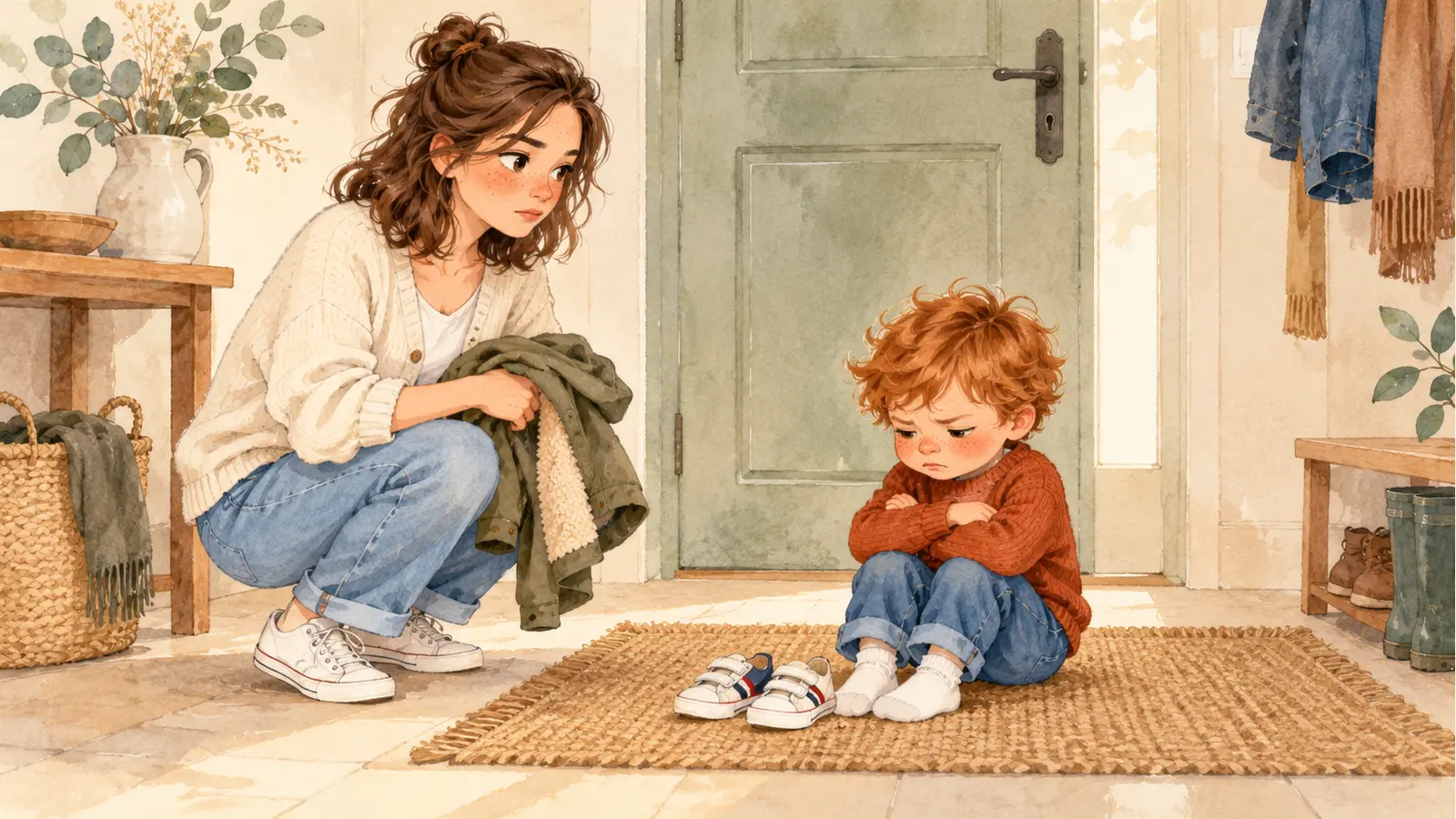
Gabriel, nearly four, stops in the hallway to redo the strap on his shoe. His mum, Marie, already has the keys in her hand. She opens the door a crack and says in a singsong voice, “Right, I’m leaving without you!” She expects him to laugh.
Gabriel straightens up. He grabs Marie’s coat and asks where he’s going to wait. She closes the door. He’s already trying to work out what to do if she leaves.
When a joke sounds like an announcement
Gabriel laughs when Marie makes a sock talk. In the hallway, he has just seen the keys and the open door, two things he associates with actually leaving. What his mum said sounded plausible enough to take seriously.
Children won’t all react the same way, and the same child can get a joke one day and worry about it the next. A practical question like Gabriel’s gives Marie a clue about what he heard.
Say right away how you’ll leave
“I said I was leaving without you. I’m staying here. We’re going out together.”
“We need to go. Do you want to fasten your shoe or shall I help?”
Marie waits until Gabriel has heard that they’ll leave together before bringing up the shoe again. If your child still needs to see that you’re staying, give them a moment to see you wait before repeating the instruction.
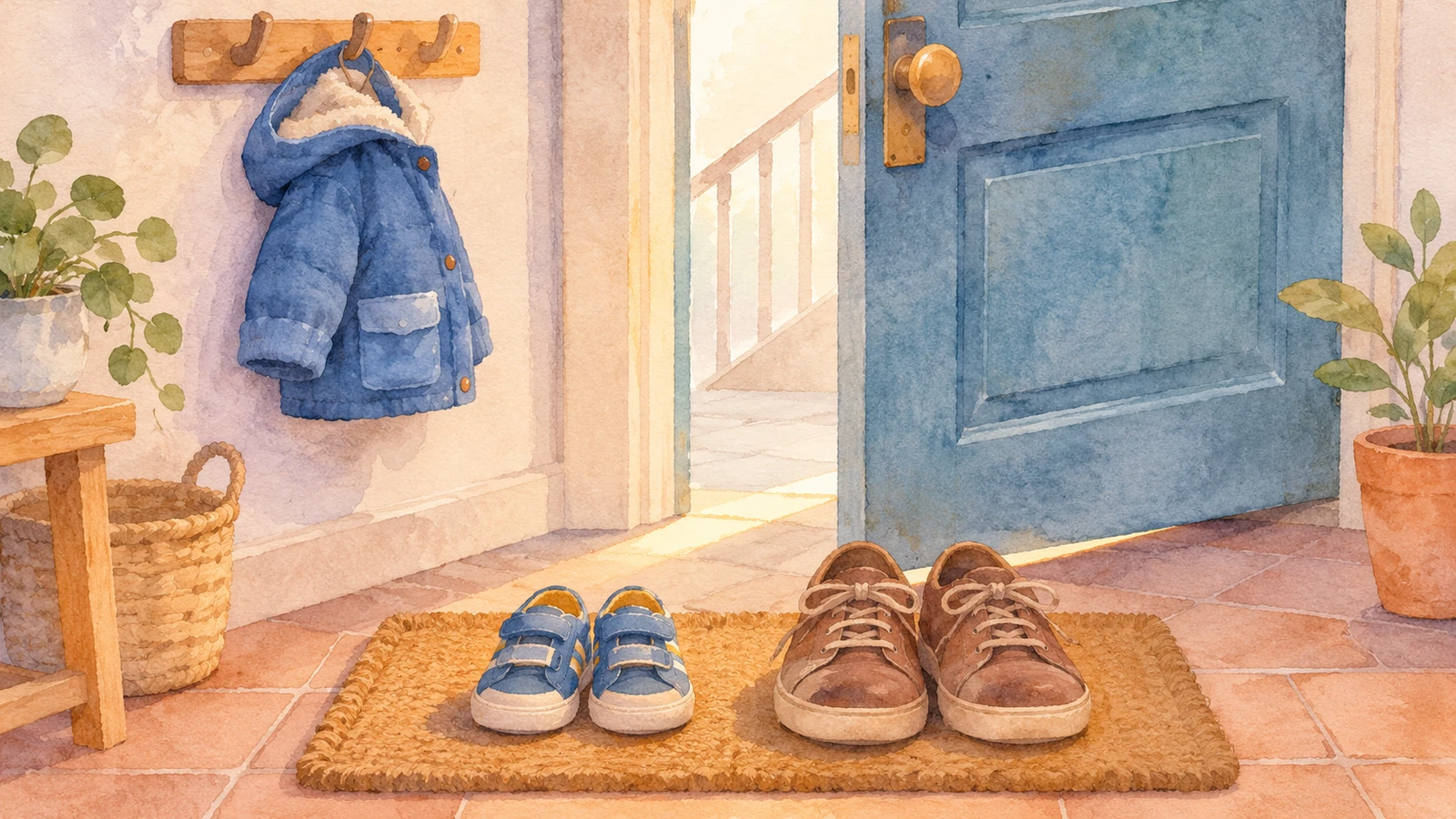
Gabriel lets go of the coat and goes back to fastening the strap. He asks Marie to hold the tongue of his shoe. She bends down to help. When the door opens again, they’re both ready to leave.
Keep this handy
The situation
Your child worries when you joke about leaving without them.
Try this
Say what will actually happen, then come back to what they need to do to leave.
- I’m staying here. We’re going out together.
Keep in mind: Give them time to see that you’re waiting.